Here is a number that should alarm anyone caring for an aging parent: medication non-adherence causes approximately 125,000 deaths and 10% of all hospitalizations in the United States annually. Among seniors, the problem is especially acute. The average person over 65 takes five or more prescription medications daily. Some take 10 or more. Complex regimens with different pills at different times of day, some with food, some without, some that interact dangerously with others, create a system that would challenge anyone’s memory.
For someone with mild cognitive impairment or early dementia, the challenge becomes life-threatening. They do not just miss doses. They take double doses because they forgot they already took their pills. They take the wrong medication at the wrong time. They stop taking a critical drug without realizing it.
The plastic pill organizer (Sunday through Saturday, four compartments per day) is the traditional solution, but it has a fundamental flaw: it relies on the person remembering to open the right compartment at the right time. For someone with memory issues, that is exactly the thing they cannot do.
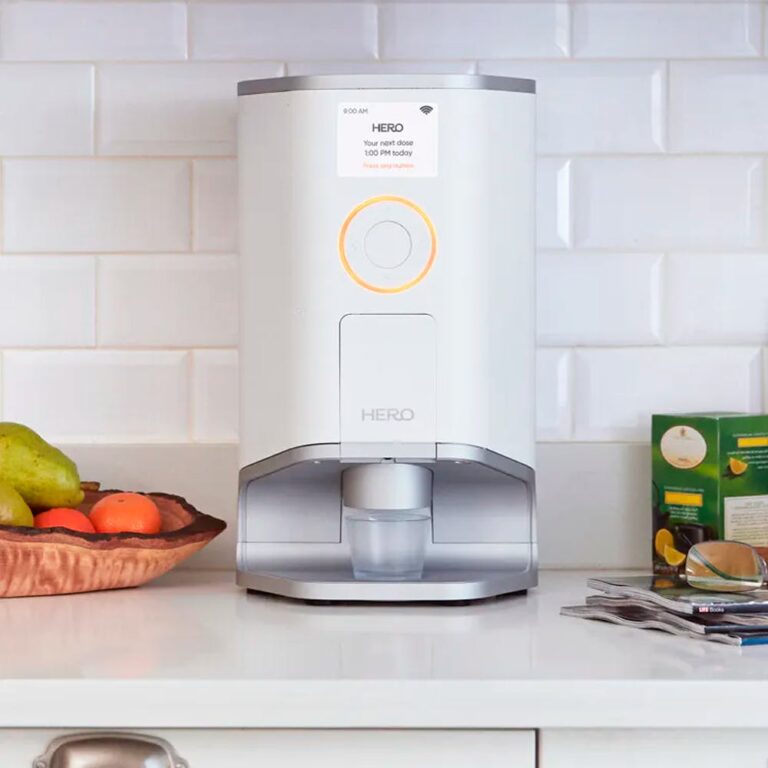
Hero Smart Pill Dispenser
Automated pill sorting and dispensing with caregiver alerts
Check PriceHow Automated Pill Dispensers Change the Equation
An automated pill dispenser fundamentally changes the medication management model. Instead of relying on the person to remember what to take and when, the machine handles the sorting, timing, and alerting. The person’s only job is to take the pills when the machine presents them.
The Hero pill dispenser is the most capable system currently available for home use. Here is how it works in practice:
Loading Medications
Each medication goes into its own dedicated cartridge inside the Hero machine. You can load up to 10 different medications, and each cartridge holds about a month’s supply depending on pill size. The machine holds large pills (calcium, fish oil supplements) as well as small tablets.
You configure the schedule through the Hero app: which pills, what time, how many. For example, one blood pressure pill at 8 AM, two vitamins with lunch at noon, a statin and a blood thinner at 8 PM. The machine stores all of this.
Dispensing
At each scheduled time, the Hero sounds an alarm and its screen lights up. The person presses a single button. The machine internally sorts the correct combination of pills from multiple cartridges and drops them into a small cup. They take the pills from the cup. Done.
This is critically different from a pill organizer. The person does not need to know which pills to take or identify them by color and shape. They do not open compartments or count tablets. The machine makes all those decisions.
Caregiver Monitoring
This is where the Hero truly shines for families managing a parent’s care remotely. The app sends real-time notifications:
- Dose dispensed: You see confirmation that the pills were taken
- Dose missed: If the person does not press the button within a configurable time window, you receive an alert
- Medication running low: When a cartridge is getting low, you get advance notice to arrange a refill
- Machine jammed or error: If a pill gets stuck, you know immediately rather than discovering it days later
For an adult child living across town or across the country, this information is invaluable. You know your parent took their blood thinner this morning. You know they missed their evening statin and can call to remind them. You can see the full history of adherence over days and weeks to share with their doctor.
The Lock Mechanism: Preventing Double-Dosing
Double-dosing is one of the most dangerous medication errors, and it is disturbingly common among people with memory issues. The thought process is simple: “Did I take my pills? I do not remember. Better take them again to be safe.” For medications like blood thinners (warfarin), heart medication (digoxin), or diabetes drugs (insulin), a double dose can cause bleeding, cardiac events, or severe hypoglycemia.
The Hero machine is locked. The person cannot open it and access the medications inside. They can only receive what the machine dispenses at scheduled times. If they press the button after already taking their dose, nothing happens. The machine simply will not dispense again until the next scheduled time.
This provides peace of mind that goes beyond what any pill organizer, app-based reminder, or phone alarm can offer. The medications are physically secured.
When to Introduce an Automated Dispenser
Timing matters. Introduce it too early and your parent may feel insulted (“I can manage my own pills”). Introduce it too late and they may not understand how to use it. Here are the signals that it is time:
- Finding pills in unusual places: Pills on the counter, in pockets, dropped on the floor. This suggests confusion about the regimen.
- Prescription refills are off-schedule: If a 30-day prescription runs out in 20 days, they may be double-dosing. If it lasts 45 days, they are missing doses.
- Confusion about which pill is which: If they cannot explain what each medication is for, they may be mixing them up.
- Missed doses showing up in bloodwork: A doctor noting that drug levels are inconsistent is a clear signal.
- You are filling a pill organizer for them: If you are already managing their medications manually, the Hero automates and improves what you are doing.
Setting Up the Hero: A Practical Walkthrough
- Gather all medications. Collect every prescription and over-the-counter supplement they take. Check expiration dates. Note which ones need refrigeration (those will not go in the machine).
- Reconcile with the doctor. Before loading the machine, ask their doctor or pharmacist for an updated medication list. Seniors often accumulate medications from multiple doctors that no one has reviewed holistically. This is called a “medication reconciliation” and can identify dangerous interactions, duplicates, and medications that are no longer needed.
- Create the schedule in the app. Enter each medication with its name, dose, and scheduled times. The app walks you through this step by step.
- Load the cartridges. Pour each medication into its designated cartridge. The machine confirms the pill count.
- Run a test cycle. Trigger each scheduled time manually and verify the correct pills come out in the correct quantities. Count them. Check them against the prescription.
- Show your parent. Walk them through the process: the alarm sounds, they press the button, they take the pills from the cup. Practice it three or four times.
- Set up caregiver alerts. Configure which notifications you want on your phone. At minimum, enable the “missed dose” alert.
What the Hero Does Not Do
No technology is a complete solution. Here are the limitations to be aware of:
- It does not ensure pills are swallowed. The machine dispenses the pills, but it cannot confirm they were actually taken. If your parent presses the button but walks away without taking the pills, the machine registers a “dispensed” event.
- It does not handle liquids, inhalers, or injections. Only solid pills and capsules can be loaded. Liquid medications, insulin injections, eye drops, and inhalers need a separate management system.
- It does not replace pharmacist guidance. The machine dispenses on the schedule you set. If a medication should be taken with food, on an empty stomach, or separated from another drug by two hours, you need to build that logic into the schedule yourself.
- It requires periodic refilling. Someone needs to refill the cartridges approximately monthly. If you do not live nearby, this can be coordinated with a home health aide, a neighbor, or the pharmacy delivery service.
The Cost Question
The Hero operates on a subscription model. The machine itself is provided with the service. Monthly costs typically range from $30-50 depending on the plan. This is real money, especially on a fixed income.
To put it in perspective: a single hospital admission for a medication-related adverse event averages $7,000-$10,000. A fall caused by a missed blood pressure medication. A blood clot from skipped anticoagulants. A diabetic emergency from erratic insulin. If the Hero prevents even one of these events, it has paid for itself for years.
Some Medicare Advantage plans and supplemental insurance programs are beginning to cover medication management devices. Check with your parent’s insurance provider. Additionally, ask the prescribing doctor if they can write a letter of medical necessity, which some insurance plans require for coverage of assistive devices.
Frequently Asked Questions
What happens during a power outage?
The Hero has a battery backup that keeps the schedule running during short outages. For extended outages, the machine will resume its schedule when power returns. However, if the outage spans a scheduled dose time, the person will not receive their alarm. This is a scenario where a backup plan (like a phone alarm or a check-in call from family) is important.
Can the machine handle half-pills or split tablets?
Generally yes, though very small fragments may not dispense reliably. If a prescription requires splitting tablets, ask the pharmacist if the medication is available in the needed dose as a whole pill. Many common medications come in multiple strengths for exactly this reason.
My parent says they do not need a machine to take their pills.
This is the most common objection. Rather than arguing about whether they need it, frame it as making your life easier. “This is really for me, so I do not have to worry. It would mean a lot to me to know your pills are being managed.” Many parents will accept technology to relieve their children’s anxiety even if they would not accept it for their own benefit.
What if they refuse to press the button when it goes off?
This may indicate the condition has progressed beyond what the Hero can address independently. If the person does not respond to the alarm consistently, they likely need in-person medication assistance. The Hero’s missed-dose alerts still serve a purpose: they tell you exactly how often doses are being missed, which is critical data for the care team to have when making decisions about the level of care needed.