Getting a good night’s sleep becomes harder with age. Acid reflux keeps you propped up on pillows that slip during the night. Back pain makes it impossible to find a comfortable position. Swollen legs and feet need elevation that a flat mattress cannot provide. And the simple act of getting out of bed in the morning, something that used to be automatic, becomes a deliberate physical effort.
An adjustable bed base addresses all of these issues with a single piece of equipment. It raises and lowers the head and foot of the bed independently, using quiet electric motors controlled by a remote. No more stacking pillows that flatten by midnight. No more struggling to sit up before swinging your legs to the floor. The bed does the work.
This guide covers the real health benefits of adjustable beds for seniors, what to look for when shopping, how to handle mattress compatibility, and how adjustable bases compare to hospital beds for aging in place.
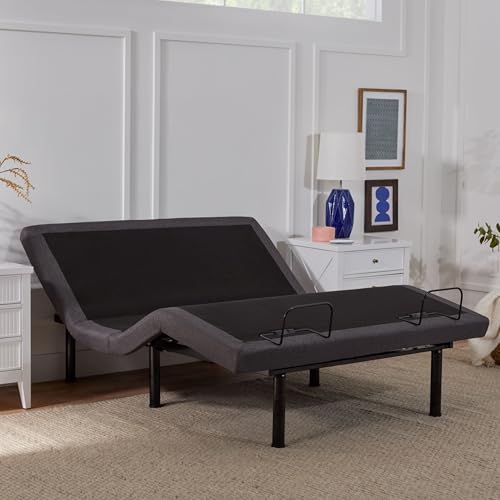
LUCID L300 Adjustable Bed Base, Queen Size
Motorized adjustable base with independent head (0-60 degrees) and foot (0-45 degrees) incline, wireless backlit remote, USB ports, and a 10-year warranty.
Check Price on AmazonThe Health Benefits That Actually Matter
Adjustable bed manufacturers make a lot of claims. Some are well supported by evidence and everyday experience. Others are marketing. Here is what genuinely helps.
Acid Reflux and GERD
This is the most evidence-backed benefit of head elevation during sleep. Gastroesophageal reflux disease (GERD) causes stomach acid to flow back into the esophagus when you lie flat. Gravity is no longer helping keep the acid down. Elevating the head of the bed by 6 to 8 inches (approximately 20 to 30 degrees) uses gravity to reduce this backflow. Multiple clinical studies have demonstrated that head-of-bed elevation reduces both the frequency and duration of reflux episodes during sleep.
The key detail: the entire upper body needs to be elevated, not just the head. Propping your head up with pillows creates a bend at the neck and waist that can actually worsen reflux by compressing the stomach. An adjustable base elevates the entire torso on a gentle incline, which is the position that doctors recommend.
Snoring and Mild Sleep Apnea
Snoring occurs when soft tissue in the airway partially collapses during sleep, causing vibration as air passes through. A slight head elevation (10 to 15 degrees) helps keep the airway open by preventing the tongue and soft palate from falling backward as far. For bed partners, this can be transformative.
For mild obstructive sleep apnea, head elevation can reduce the number of apnea events per hour, though it is not a replacement for CPAP therapy in moderate to severe cases. Some sleep doctors recommend using an adjustable base in combination with CPAP for the best results.
Lower Back Pain and Sciatica
Sleeping flat on your back places the lumbar spine in a position that can aggravate disc and nerve issues. Physical therapists have long recommended placing a pillow under the knees to tilt the pelvis and relieve lumbar pressure. An adjustable bed achieves this more effectively and consistently. Raising the foot section 15 to 20 degrees takes pressure off the lower back and decompresses the lumbar discs. Unlike a pillow, the bed stays in position all night.
For sciatica specifically, the combination of slight head elevation and moderate foot elevation creates a reclined position that reduces nerve compression. Many people with sciatica report that this is the first position that lets them sleep through the night without pain waking them up.
Leg Swelling and Circulation
Edema in the legs and feet is common in older adults, particularly those with heart failure, kidney disease, or who spend long periods sitting. Elevating the feet above heart level allows gravity to help drain fluid from the lower extremities. An adjustable bed makes this effortless: raise the foot section before going to sleep, and gravity works all night. Many users notice a measurable reduction in morning ankle swelling within the first week.
Getting In and Out of Bed
This is the benefit that caregivers talk about most. For seniors with hip replacements, knee problems, arthritis, or general mobility limitations, the transition from lying down to standing is one of the most challenging moments of the day. It requires core strength to sit up, balance to swing the legs over the edge, and leg strength to stand.
An adjustable base changes this sequence entirely. Raise the head to a near-sitting position using the remote. The bed does the sit-up for you. Then swing your legs to the floor and lean forward to stand. The effort required drops dramatically. For some seniors, this is the feature that lets them continue getting out of bed independently rather than needing someone to help them every morning.
What to Look for in an Adjustable Base
The adjustable bed market ranges from bare-bones bases under $300 to luxury models over $3,000. Here is what actually matters at each price point.
Essential Features (Budget Models, $250-$500)
Independent head and foot adjustment. Both zones should move independently. Some ultra-budget models only adjust the head, which eliminates the benefits of foot elevation.
Wireless remote with backlit buttons. You will adjust the bed in the dark. Backlit buttons are not a luxury. A wired remote that gets tangled in sheets is a nightly frustration.
Quiet motors. Test this if possible before buying (or read reviews carefully). A loud motor defeats the purpose of a remote control by waking up your partner every time you adjust.
Adequate weight capacity. 600 pounds minimum. This accounts for the mattress weight plus sleepers. Most quality bases support 700 to 750 pounds.
At least a 5-year warranty. Motors and electronics can fail. A warranty matters.
Nice-to-Have Features (Mid-Range, $500-$1,200)
Memory positions. Save your favorite angle so you can return to it with one button press. Two or three memory positions are useful: one for sleeping, one for reading or watching TV, one for getting out of bed.
Zero-gravity preset. This positions the head and legs at specific angles that distribute body weight evenly and reduce pressure on the spine. It was developed from NASA research on neutral body posture. Many people find it is the most comfortable sleeping position, though you can approximate it manually on any adjustable base.
USB ports. Convenient for charging phones and tablets without a bedside extension cord.
Under-bed lighting. A gentle light strip that illuminates the floor when activated. Useful for nighttime bathroom trips without turning on a lamp.
Premium Features ($1,200+)
Massage. Built-in vibration motors in the head and foot zones. Ranges from a gentle buzz to noticeable vibration. Some people love it. Others use it once and forget about it. Try it in a store if possible before paying extra for it.
Wall-hugging mechanism. As the head rises, the base slides the bed forward so you stay within reach of your nightstand. Without this, a fully raised head position moves you several inches away from the nightstand and any items on it.
App control and smart home integration. Control the bed from your phone, set schedules, or integrate with voice assistants. Useful for tech-comfortable households. Unnecessary complexity for others.
Split king configuration. Two twin XL adjustable bases side by side under separate mattresses. Each sleeper controls their own side independently. This is the gold standard for couples with different comfort needs but requires buying two bases and two twin XL mattresses.
Mattress Compatibility
This is where many people make a costly mistake. Not every mattress works with an adjustable base.
What Works
Memory foam mattresses are the best match. They flex easily as the base adjusts and conform to the curved position without resistance. Most memory foam mattresses between 8 and 14 inches thick work well.
Latex mattresses are naturally flexible and work well with adjustable bases. They tend to be more responsive than memory foam, returning to their original shape faster when the base moves.
Hybrid mattresses (foam top over individually wrapped coils) work with most adjustable bases. The individually wrapped coils flex independently, allowing the mattress to bend. Check the manufacturer’s specifications, as some hybrids are more flexible than others.
What Does Not Work
Traditional innerspring mattresses with connected coil systems do not bend well. The interconnected coils resist the bending motion, which strains both the mattress and the base motors. Using an innerspring mattress on an adjustable base will likely void the warranty on both.
Very thick mattresses (over 14 inches) may not flex properly and can create gaps between the mattress and the base at the bend points.
Flippable mattresses with firm sleeping surfaces on both sides are typically too rigid to work with adjustable bases.
If you currently have an incompatible mattress, budget $300 to $600 for a new memory foam or hybrid mattress alongside the adjustable base. Many affordable options pair perfectly and the combined cost is still well below what a premium traditional bed setup costs.
Setup and Installation
Most adjustable bases are designed for home assembly without professional installation. Here is what to expect.
Getting It Into the Bedroom
The base arrives in a heavy box (80 to 120 pounds for a queen). You will need two people to carry it to the bedroom. Plan the path from the front door to the bedroom beforehand and clear any obstacles. If stairs are involved, three people is safer.
Assembly
Most bases unfold from the box and require connecting one or two motor cables. No tools are needed for most models. Total assembly time is 10 to 20 minutes. The most common mistake is not fully seating the cable connections, which causes one zone to not respond to the remote.
Placement Options
Adjustable bases can sit directly on the floor (the simplest option), drop into an existing bed frame, or sit on a platform bed. If you are using it freestanding, check the height. Most bases sit 14 to 16 inches off the floor, which is a good sitting height for most adults. If the bed is too low, consider adding bed risers under the base legs for extra height.
Headboard Compatibility
Some adjustable bases have headboard brackets that let you attach a headboard directly to the base. Others rely on the headboard being attached to the bed frame rather than the base. If your headboard is wall-mounted, there is no compatibility issue. If it attaches to the bed frame, make sure the adjustable base fits inside the frame without interfering with the headboard’s position.
Adjustable Beds vs. Hospital Beds
Families sometimes debate whether to get an adjustable base or a full hospital bed. The answer depends on the level of care needed.
Choose an Adjustable Base If:
The senior can get in and out of bed independently (with or without the head elevation assist). The primary needs are comfort and health (reflux, pain, circulation). The home environment should feel like a home, not a medical facility. Budget is a concern.
Choose a Hospital Bed If:
The senior needs full side rails for fall prevention while in bed. Caregivers need the bed to raise and lower in total height for providing care (bathing, dressing, transfers). Full Trendelenburg position (feet higher than head at a steep angle) is medically required. The senior is largely bedbound and the bed is the primary living space.
The Practical Middle Ground
For most seniors aging in place, an adjustable base provides 80% of the functional benefit of a hospital bed at 20% of the cost, without making the bedroom look clinical. Hospital beds become necessary when care needs escalate to the point that the bed itself needs to assist caregivers, not just the person sleeping in it. Many families start with an adjustable base and transition to a hospital bed only if and when the care needs change.
Common Concerns and Questions
Will It Damage My Floor?
Adjustable bases with legs can leave impressions on hardwood and vinyl floors, especially with the combined weight of the base, mattress, and sleepers concentrated on small points. Use furniture pads or coasters under each leg to distribute the weight.
Can I Use My Existing Sheets?
Standard fitted sheets work when the bed is flat but may pop off the corners when the head or foot is raised. Deep-pocket fitted sheets (18 to 21 inches) stay in place better. Some companies make sheets specifically designed for adjustable beds with straps or extra-deep corners, but most people find that good-quality deep-pocket sheets are sufficient.
What Happens During a Power Outage?
Most adjustable bases have a manual release that lets you flatten the bed if the power goes out. Some higher-end models include a battery backup that provides enough power for a few adjustments. Check the manual for your specific model.
How Long Do the Motors Last?
Quality adjustable base motors are rated for 10 to 20 years of normal use (one to two adjustments per day). The warranty period is a reasonable indicator of the manufacturer’s confidence in the motor lifespan. A base with a 10-year warranty is likely built to last at least that long with daily use.
Making the Transition
If you are a caregiver helping a parent switch to an adjustable bed, plan for a one-week adjustment period. The new sleep position feels different, and it takes a few nights to find the angles that feel best. Start with subtle adjustments (10 to 15 degrees of head elevation, 5 to 10 degrees of foot elevation) and increase gradually as comfort develops.
Place the remote where it will not get lost. Many remotes have a hook or clip for attaching to the headboard or nightstand. Show the senior how to use the flat button to return the bed to a fully flat position quickly, in case they feel uncomfortable and want to go back to what they know.
Within a week, most people find a position they prefer and begin sleeping better than they have in years. The combination of reduced reflux, less back pain, better circulation, and easier mornings adds up to a noticeable improvement in daily quality of life. An adjustable bed is one of those investments where the benefit is felt immediately and lasts for years.