The bedroom seems like the safest room in the house. It is familiar. It is private. There is nothing sharp or hot or wet. But statistics tell a different story. Roughly half of all nighttime falls among older adults happen in or near the bedroom. The path from bed to bathroom at 2 AM is one of the most dangerous walks your parent takes each day.
This guide covers two connected topics: making the bedroom physically safer to prevent nighttime falls, and using sleep tracking technology to spot health changes before they become emergencies. Both are about the same underlying goal. Helping your parent stay safe during the eight hours of the day when nobody is watching.
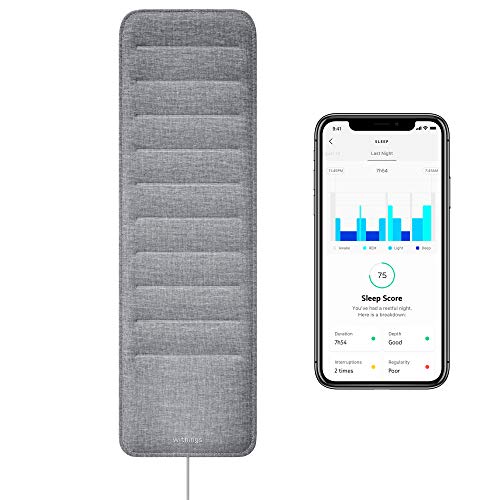
Withings Sleep Tracking Mat
Under-mattress sensor that tracks sleep cycles, heart rate, and snoring without wearing anything
Check Price on AmazonWhy Nighttime Falls Are So Dangerous
Falls during the day are bad enough. Nighttime falls are worse for several specific reasons.
Disorientation. Waking from deep sleep to a full bladder creates urgency combined with grogginess. Your parent may not be fully awake when they stand up. Spatial awareness is reduced. Reaction times are slower. They may misjudge the distance to the door or the location of furniture.
Darkness. Even if your parent knows their bedroom layout, darkness removes the visual cues that help with balance. Healthy adults use vision for about 20% of their balance control. For older adults with existing balance issues, that percentage is higher. Take away the visual input and the risk of stumbling increases dramatically.
Orthostatic hypotension. This is a fancy term for a simple and common problem: blood pressure drops when standing up quickly. After lying down for hours, blood pools in the legs. Standing up rapidly, especially with urgency, can cause a sudden drop in blood pressure that leads to dizziness or brief blackout. This is the exact moment when many nighttime falls happen. Your parent stands, gets lightheaded, loses balance, and goes down before they can catch themselves.
No immediate help. If your parent lives alone and falls at 2 AM, there is nobody to hear the fall or call for help. Without a medical alert device or some form of monitoring, they may lie on the floor for hours. Research shows that older adults who lie on the floor for more than an hour after a fall have a significantly higher risk of hospitalization, long-term care placement, and death within six months.
Physical Modifications for a Safer Bedroom
Before adding any technology, address the physical hazards. These changes are inexpensive and can be done during a single visit.
The Path from Bed to Bathroom
Stand at your parent’s bedside and trace the exact route they walk to the bathroom. This path must be completely clear of obstacles. Remove shoes, books, charging cables, throw rugs, and any furniture that narrows the walkway. The path should be wide enough to walk without turning sideways, even if your parent uses a walker.
Next, address the lighting. There are three options, listed from simplest to most effective:
- Plug-in nightlights. Place one near the bedroom door, one in the hallway, and one at the bathroom entrance. Choose models with light sensors that turn on automatically at dusk. These cost a few dollars each and install in seconds.
- Motion-activated floor lights. LED strip lights installed along the baseboard of the path from bed to bathroom activate when they detect movement. They illuminate the floor without flooding the room with bright light that would fully wake your parent. These install with adhesive backing and battery packs.
- Smart motion sensors with connected lights. The most effective but also the most complex option. A motion sensor near the bed detects when your parent stands up and automatically turns on hallway lights at a low, warm brightness. The lights turn off after a set period of no motion.
Bed Height and Access
The height of the bed matters more than most people realize. When your parent sits on the edge of the bed, their feet should rest flat on the floor with their knees bent at approximately 90 degrees. If the bed is too high, they have to slide or jump down, which is a fall risk. If the bed is too low, standing up requires significant effort from the knees and hips, which can cause instability.
Measure the distance from the floor to the top of the mattress. For most older adults, 20 to 23 inches is the ideal range. If the bed is too high, replacing the box spring with a low-profile version can drop the height by 3 to 5 inches. If too low, bed risers (plastic blocks that fit under each leg) can raise it to the correct height for about $20.
Consider the firmness of the mattress edge as well. A mattress that compresses significantly at the edge makes it harder to sit down and stand up with control. If the mattress is old and the edges are soft, this is a factor worth addressing.
Bedside Essentials
Your parent should be able to reach three things from bed without standing up: a phone, a light control, and a glass of water. A bedside table at the correct height (level with the top of the mattress) keeps these items accessible.
- Phone. Keep it on a charger on the nightstand. If your parent uses a medical alert device, make sure it is on their wrist or around their neck, not sitting on the table. A medical alert device in a drawer is useless during a fall.
- Light. Either a touch-activated bedside lamp or a smart speaker that responds to “Alexa, turn on the bedroom light.” Either option eliminates the need to fumble for a switch in the dark.
- Water. A spill-proof cup or water bottle prevents the need to walk to the kitchen for a drink and prevents water damage to devices on the nightstand.
Bed Rails: The Debate
Bed rails are one of the most controversial topics in senior safety. They can prevent rolling out of bed and provide something to grip when standing up. But they also have documented risks. Entrapment (getting caught between the rail and the mattress) is a serious concern, particularly for people with dementia who may try to climb over the rail.
If your parent is at risk of rolling out of bed, a low-profile bed rail that covers only the upper half of the mattress (from the pillow to the hip) is generally safer than a full-length rail. It provides a handhold for getting in and out of bed while leaving the lower half open for easy exit. Another option is a floor-level bed (mattress on a very low platform) combined with a padded mat beside the bed. If they roll out, the fall distance is minimal.
For most older adults who are mobile and do not have dementia, bed rails are unnecessary if the bed height is correct and the mattress edge is firm. Focus on those fundamentals first.
Sleep Tracking: What It Tells Caregivers
Here is where technology adds a layer of insight that physical modifications cannot provide. Sleep is one of the earliest and most sensitive indicators of health changes in older adults. When something goes wrong medically, sleep almost always changes first.
The Withings Sleep Mat is a thin sensor that slides under the mattress. Your parent does not wear anything, charge anything, or interact with it at all. It simply lies under the mattress and monitors sleep patterns using pressure-sensitive technology. It detects breathing rate, heart rate, sleep cycles, time in bed, time asleep, and how often your parent gets up during the night.
This data goes to the Withings app, which you can access as a shared user. Over days and weeks, patterns emerge. And when those patterns change, it often signals a health issue before any visible symptoms appear.
What Sleep Changes Can Signal
Urinary tract infections (UTIs). UTIs are extremely common in older adults and are a leading cause of sudden confusion in seniors. One of the earliest signs is increased nighttime bathroom visits. If the sleep mat shows your parent went from waking up once per night to four times per night over the span of a few days, a UTI is a strong possibility. Catching it early means a simple course of antibiotics instead of a trip to the emergency room for acute confusion.
Pain flare-ups. Arthritis, back pain, and other chronic pain conditions often worsen before the person reports them. Restless sleep, frequent position changes, and reduced total sleep time can indicate that pain is increasing. This is valuable information for your parent’s doctor, especially if your parent tends to downplay their pain.
Medication side effects. New medications or dosage changes can disrupt sleep. If your parent started a new prescription last week and their sleep quality dropped sharply, the medication is a likely suspect. Sleep data gives you a concrete data point to bring to the doctor rather than a vague “Mom says she is not sleeping well.”
Heart and respiratory changes. The sleep mat tracks resting heart rate and breathing rate during sleep. Gradual increases in resting heart rate can indicate infection, dehydration, heart failure progression, or thyroid issues. Changes in breathing patterns can signal respiratory problems, sleep apnea, or fluid retention (a common sign of heart failure).
Depression and cognitive decline. Both conditions affect sleep patterns. Sleeping significantly more than usual, waking very early and not falling back asleep, or spending long hours in bed without actually sleeping are all patterns associated with depression. Progressive changes in sleep architecture (less deep sleep, more fragmented sleep) can be an early indicator of cognitive decline.
How to Use Sleep Data Effectively
The goal is not to obsess over nightly numbers. Individual nights vary for normal reasons: a late cup of coffee, an exciting phone call, a thunderstorm. The value is in trends over weeks and months.
Set up the Withings app to show you weekly averages. Look for sustained changes. If your parent’s average nighttime wake-ups go from 1.5 to 3.5 over two weeks, that is significant. If their average resting heart rate during sleep climbs from 65 to 75 over a month, that warrants a call to the doctor.
When you bring sleep data to a medical appointment, doctors pay attention. It is objective, time-stamped, continuous data that is far more useful than a patient’s self-report of “I slept fine, I think.” Sleep data has changed the conversation at countless medical appointments from guessing to knowing.
Night Monitoring Without Cameras
Many adult children want to know that their parent is okay during the night, but cameras in the bedroom are a clear privacy violation. The sleep mat provides a middle ground. You can see that your parent is in bed, that they are breathing normally, and that they have not gotten up an unusual number of times. You cannot see them. You cannot hear them. But you know they are safe.
If you want additional nighttime monitoring without cameras, consider these options:
- Medical alert with fall detection. If your parent falls between the bed and the bathroom, a wearable alert device can detect the fall and call for help automatically. This works even if your parent is unconscious.
- Smart nightlight with motion logging. Some smart home platforms can log when motion-activated lights turn on. If the hallway light activates at 2 AM and again at 2:04 AM, you know your parent made it to the bathroom and back. If it activates at 2 AM and never registers the return trip, something may be wrong.
- Presence sensor in the bathroom. A presence sensor (not a camera) in the bathroom can alert you if your parent has been in the bathroom for an unusually long time, which could indicate a fall or medical event.
Starting the Conversation
Bedroom safety can be a sensitive topic. The bedroom is deeply personal space, and suggesting modifications can feel intrusive. Here are some approaches that work better than others.
Start with lighting. “I brought some nightlights for the hallway so you do not have to fumble for the switch when you get up at night.” This is a small, non-threatening change that most parents welcome.
Frame sleep tracking as health information, not surveillance. “Your doctor mentioned that sleep quality can affect blood pressure. This mat goes under the mattress and tracks your sleep patterns so we can share useful information at your next appointment.” Connect it to a medical purpose they already care about.
Let them set the pace. Install the nightlights on one visit. Adjust the bed height on the next. Add the sleep mat a month later. Gradual changes are less overwhelming than a complete bedroom overhaul in a single afternoon.
The bedroom should be a sanctuary, not a source of anxiety. Every modification should make your parent feel safer and more comfortable, not more dependent or monitored. If you approach it with that mindset, the conversation goes much more smoothly.