When a severe thunderstorm knocked out power across a suburb of Charlotte last winter, most households pulled out flashlights, checked their phones, and waited it out. But for seniors living alone, the story was different. Some could not find a flashlight. Others had no idea the storm was coming because they had been asleep when warnings aired on television. A few had cell phones that died within hours because they had not charged them. And at least one elderly woman on blood pressure medication that requires refrigeration had no plan for what to do when the fridge went dark.
Emergencies do not announce themselves on a convenient schedule. They hit at 2 AM. They hit on holidays. They hit when your adult child is traveling and unreachable. For seniors who live alone, the gap between a minor inconvenience and a genuine crisis is often just a matter of preparation.
This guide covers the specific emergency scenarios that affect older adults most, the supplies they actually need (not the generic list from a government website), and the technology that can bridge the gap between isolation and help.
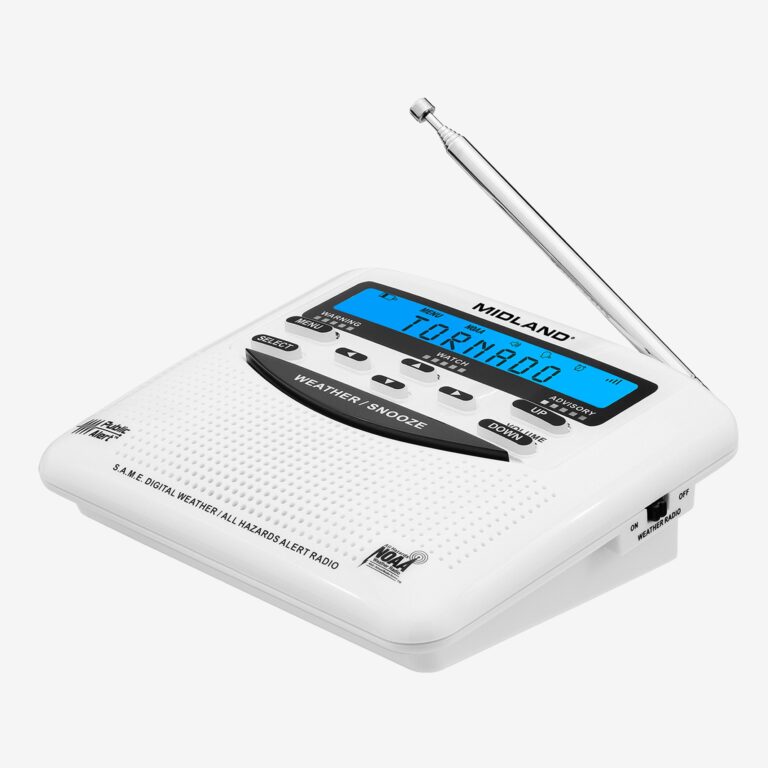
Midland WR120B NOAA Weather Radio
Automatic NOAA severe weather alerts with alarm even when the radio is silent
Check Price on AmazonWhy Seniors Face Higher Risk in Every Emergency
It is not just about physical frailty, though that matters. Seniors face compounding vulnerabilities that younger adults do not think about. Medications that require refrigeration can become dangerous or useless in a power outage. Hearing loss means weather sirens and smoke alarms may go unheard. Mobility limitations make evacuation slower. And cognitive changes mean that the stress of an emergency can cause confusion and poor decision-making even in someone who normally functions well.
FEMA data consistently shows that adults over 65 account for a disproportionate share of disaster-related deaths. During Hurricane Katrina, over 70% of the fatalities in Louisiana were people over 60. During heat waves, seniors living alone are the most likely demographic to die. This is not about being alarmist. It is about being realistic.
The good news is that most of the risk can be reduced with straightforward preparation. The problem is that most families do not have the conversation until after something goes wrong.
The Senior-Specific Emergency Kit
Every emergency preparedness website will tell you to stock water, non-perishable food, a flashlight, and a first aid kit. That is a fine starting point, but it misses the items that matter most for an older adult living alone.
Medications: The Most Critical Item
A senior’s emergency kit should include a 7-day supply of all prescription medications, rotated regularly so they do not expire. This is harder than it sounds. Many insurance plans will not fill a prescription early, so you may need to talk to the pharmacist about getting an emergency supply authorized. Some doctors will write a prescription specifically for an emergency kit if you explain the situation.
Keep a printed list of all medications, dosages, and the prescribing doctor’s phone number in the kit. In an evacuation, your parent may end up at a shelter or hospital where no one has access to their pharmacy records. That printed list could be the difference between proper treatment and dangerous guesswork.
If any medications require refrigeration, include a small insulated bag and a plan for ice. Know how long each medication can safely stay at room temperature. Your pharmacist can answer this question for every drug in the lineup.
Medical Devices and Supplies
Hearing aid batteries. A backup pair of glasses. Extra supplies for a CPAP machine, oxygen concentrator, or any other medical device. A portable charger specifically for medical devices that run on rechargeable batteries. If your parent uses a powered wheelchair or scooter, a backup charging plan is essential.
Many people overlook dentures. If your parent evacuates in the middle of the night without their dentures, they may not be able to eat solid food at a shelter. Keep a denture case in the emergency kit near the bed.
Documents
Copies of insurance cards, photo ID, a health care proxy or power of attorney, and the medication list mentioned above. Store these in a waterproof bag. In a fire or flood, the originals may be destroyed. Digital copies on a phone are helpful but not sufficient because phones die, break, and get lost.
Comfort and Practical Items
A warm blanket (hypothermia risk is higher for seniors). Non-slip shoes that can be put on quickly. A whistle to signal for help if trapped. A battery-powered or hand-crank radio. Large-print emergency contact numbers. A nightlight or headlamp that does not require holding a flashlight.
Why Cell Phones Are Not Enough
Families often assume that as long as Mom has a cell phone, she can call for help in any emergency. This assumption fails in multiple ways.
Cell towers go down during severe storms, and they go down in exactly the areas where the storm is worst. During widespread power outages, towers that survive the storm eventually lose their backup power. Within 8 to 24 hours, large sections of a cell network can go dark.
Even when towers are working, a phone only works if it is charged. Seniors frequently let their phones drop to low battery because they forget to charge them, because the charging cable is in another room, or because they do not use the phone enough to develop a daily charging habit. In a power outage, a phone at 15% battery will be dead within a couple of hours.
A weather radio like the Midland WR120B solves a different problem entirely. It does not rely on cell towers or internet. It receives NOAA weather broadcasts directly, and it can be programmed to sound an alarm automatically when a warning is issued for your parent’s county. It runs on battery backup when the power goes out. And it requires zero interaction from your parent. It just works, sitting on a nightstand, waiting for the moment it is needed.
For communication, a simplified cell phone like the Jitterbug Flip2 is easier to keep charged and easier to use under stress than a smartphone. But even with a reliable phone, your parent needs a plan for when that phone stops working.
Building a Communication Plan
An emergency communication plan for a senior living alone should answer five questions:
- Who does your parent call first? This should be the closest person geographically, not necessarily the closest family member. A neighbor who can be there in three minutes is more useful during a house fire than a daughter who lives two hours away.
- Who is the backup? If the first contact does not answer, who is next? Have at least three contacts in priority order.
- How does your parent reach them if the phone is dead? A neighbor with a standing agreement to check in during any power outage is a low-tech solution that works. A medical alert pendant with cellular connectivity is another option.
- Where does your parent go if they need to leave the house? Identify two locations. A nearby neighbor’s house and a more distant meeting point if the neighborhood itself is affected.
- How will you know your parent is safe? Establish a check-in protocol. After any weather warning, your parent calls or texts. If you do not hear from them within a set time, you activate the backup plan.
Write this plan down in large print and post it on the refrigerator. Do not rely on your parent remembering it. The whole point of a plan is that it works even when thinking is hard.
Power Outage Preparedness
Power outages are the most common emergency for seniors, and they are dangerous for reasons that are not immediately obvious. In summer, a home without air conditioning can reach dangerous temperatures within hours, and heat stroke kills more seniors than any other weather event. In winter, a home without heat can become dangerously cold, especially for someone on blood thinners or with poor circulation.
Beyond temperature, power outages disable medical equipment, security systems, stairlifts, and the electric stove your parent uses to heat soup. They disable the garage door opener, which may be the only way your parent enters and exits the home.
Preparation steps that make a real difference:
- A battery backup for critical medical devices. Uninterruptible power supplies (UPS) designed for home computers work for CPAP machines and oxygen concentrators too. They provide several hours of runtime, which is often enough to outlast a short outage.
- Flashlights in every room. Not one flashlight in a drawer somewhere. A small LED flashlight velcroed to the wall in the bedroom, bathroom, kitchen, and living room. Your parent should never have to navigate a dark house to find a light source.
- A plan for refrigerated medications. Know which medications are affected and have a cooler and ice packs ready.
- A manual garage door release. If the garage is the primary entry, make sure your parent knows how to operate the manual release. Practice it once before an emergency so the motion is familiar.
Fire Escape Planning
House fires give you about two to three minutes to get out. For a senior with mobility limitations, that is barely enough time to get from a bed to the front door, let alone gather belongings or call for help.
A smart smoke detector like the Nest Protect adds a critical layer of safety. When it detects smoke, it does not just beep. It announces in a clear voice what the danger is and where the smoke is coming from. And it sends an alert to your phone, so you know immediately that something is happening at your parent’s house, even if they are unable to call you themselves.
Beyond the detector, fire escape planning for seniors requires specific considerations:
- Can your parent get out of bed quickly? If not, a bed rail or transfer pole near the bed can speed up the process.
- Is there a clear path from the bedroom to the nearest exit? Remove furniture, rugs, and clutter that could cause a trip in the dark.
- Can your parent open the exit door or window? Deadbolts that require a key on the inside are a fire hazard. Replace them with thumb-turn locks. If windows are painted shut, fix them.
- Does a neighbor have a key? If your parent cannot get out, firefighters or neighbors with a key can get in faster.
Practice the escape route during the daytime at least once. Walk through it together. Identify the obstacles. Make the changes. Then walk through it again. Muscle memory matters when the smoke alarm goes off at 3 AM and clear thinking is not available.
Severe Weather
Tornadoes, hurricanes, ice storms, and extreme heat each present different risks. The common thread is that seniors living alone may not receive warnings, may not understand the severity, or may not be physically able to respond appropriately.
A weather radio handles the warning problem. But you also need a safe room identified in the home. For tornadoes, that is an interior room on the lowest floor, away from windows. For hurricanes, it depends on whether the area is in an evacuation zone. For ice storms, the concern is less about immediate danger and more about being trapped at home for days without power.
For extreme heat events, the most important preparation is knowing where the nearest cooling center is and having a way to get there. If your parent does not drive, arrange transportation in advance. Do not assume they will call for a ride when they are already overheating and confused.
Putting It All Together
Emergency preparedness for a senior living alone is not about buying a pile of gear and hoping for the best. It is about creating systems that work when the person is frightened, confused, or physically limited.
The weather radio sits on the nightstand and sounds the alarm automatically. The simplified phone is always charged because it lives on its charging cradle. The smoke detector calls you directly. The emergency kit is packed and stored by the front door. The communication plan is taped to the fridge. The neighbor knows to check in during a power outage.
No single piece of this plan is complicated. But taken together, these layers of preparation can be the difference between a scary night and a tragedy. The best time to set all of this up is a quiet Sunday afternoon, not the morning after a close call.
Start with the weather radio and the medication supply. Add the communication plan and the emergency kit. Then walk through the fire escape route together. Each step takes less than an hour. And each step makes your parent meaningfully safer.