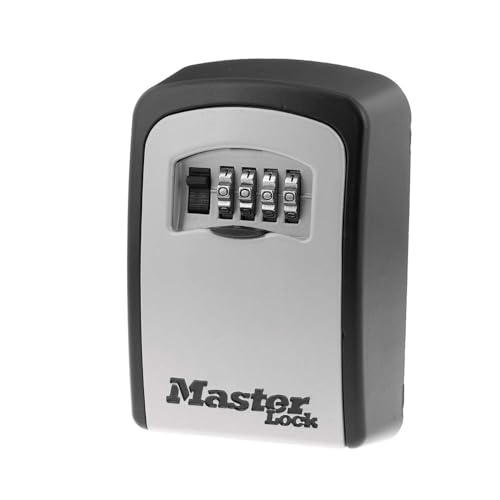
Master Lock 5401EC Wall Mount Key Lock Box
Wall-mounted weather-resistant key safe with resettable 4-digit combination for caregiver, family, and emergency responder access.
Check Price on AmazonWhy Key Access Is a Critical Part of Aging in Place
When a senior lives independently, one question does not get enough attention: who can get into the home when the senior cannot open the door? This situation arises more often than most families expect. A fall in the bathroom leaves someone unable to reach the front door. A medical episode causes confusion or unconsciousness. A caregiver arrives for a scheduled visit and gets no response to the doorbell. A family member calls repeatedly with no answer and drives over to check.
In all of these scenarios, a locked door creates a dangerous delay. Emergency responders may need to force entry, which damages the door frame and costs hundreds to repair. A caregiver waiting outside cannot provide the care they are there to deliver. A worried family member faces the choice between breaking a window and calling 911 for a welfare check.
A key safe is the simple, affordable solution. It provides controlled access to a spare key for the people who need it, when they need it, without compromising overall home security. For less than $40 and 30 minutes of installation time, families gain significant peace of mind.
Types of Key Safes
Key safes (also called lock boxes or key lock boxes) come in three main varieties, each with different strengths.
Combination Dial Key Safes
These use small rotating dials (typically four digits) to set and enter a numeric code. They are the most affordable option, with good models available for $25 to $40. The Master Lock 5401EC is the most popular example. Dial safes have no batteries and no electronics to fail. They work reliably in all weather conditions and maintain their combination indefinitely.
The trade-off is that the dials are small. Users need reasonable finger dexterity to turn them accurately. This is usually not a problem when the people opening the key safe are caregivers or family members rather than the senior themselves. But if the senior may need to open it (for example, to retrieve a spare key after locking themselves out), the small dials could be a barrier.
Push-Button Key Safes
Push-button models use larger, spring-loaded number buttons to enter the code. They are easier to operate for people with reduced dexterity or arthritis, and the buttons provide clear tactile feedback. Prices range from $30 to $60. Supra and Burton are well-known brands in this category.
Most push-button key safes are mechanical (no batteries), though some higher-end models are electronic. The mechanical versions share the dial-style advantage of no battery dependency. Push-button safes are widely used by real estate agents, care agencies, and hospice organizations because of their ease of use.
Bluetooth Smart Key Safes
Smart key safes use Bluetooth or WiFi to allow code entry via a smartphone app. Some models also support temporary codes, access logs (showing who opened the box and when), and remote code changes. Prices range from $60 to $150. Igloohome and Master Lock have smart options.
The advantages are convenience and control. A family member can issue a time-limited code to a new caregiver, see a log of every access event, and change the code remotely. The disadvantages are battery dependency (the key safe needs charged or replaced batteries), smartphone requirement, and higher cost. Smart key safes also may not work if the phone’s Bluetooth or the safe’s battery dies at a critical moment.
Which Type Is Best for Seniors?
For most families, a mechanical combination dial or push-button key safe is the best choice. They are affordable, reliable, weather-resistant, and require no ongoing maintenance. If the senior or their primary caregivers have dexterity limitations, a push-button model is worth the small additional cost. Smart key safes make sense in situations where frequent code changes or access logging are priorities.
Where to Mount a Key Safe
Location matters for both accessibility and security. Here are the guidelines:
Near the Front Door
The key safe should be close enough to the main entrance that emergency responders can find it quickly. Within 10 feet of the front door is ideal. A wall, pillar, fence post, or the door frame itself are common mounting surfaces.
Not in Plain Sight
While the key safe should be findable with directions (“on the wall to the left of the front door, behind the porch light”), it should not be the first thing a stranger notices. Mounting it at the side of a porch column, under an overhang, or behind a decorative element adds a layer of discretion without making it hard to locate.
At a Comfortable Height
Chest to eye height is standard. This makes the dials or buttons easy to read and operate. Avoid mounting too low (hard to see the combination) or too high (hard to reach for shorter individuals).
On a Solid Surface
The mounting surface must be strong enough to resist someone pulling or prying the key safe away. Solid wood, brick, concrete, and metal posts are all good choices. Vinyl siding or thin drywall (without studs) is not sufficient. Use appropriate anchors and fasteners for the wall material.
Who Should Have the Combination
The key safe code should be shared thoughtfully, not broadly. A practical access list for a senior living alone typically includes:
- Primary family contact: The adult child or family member who handles health and care coordination.
- Secondary family contact: A backup person in case the primary contact is unavailable.
- Regular caregiver or home health aide: Anyone who visits the home on a scheduled basis.
- Medical alert monitoring service: Most personal emergency response systems (Medical Guardian, Bay Alarm Medical, Lifeline) allow you to register a key safe location and code. If the senior presses their alert button and cannot open the door, the monitoring center provides the code to dispatched responders.
- Trusted neighbor: Optional, but a nearby neighbor who can respond quickly in an emergency is valuable.
Keeping Track of Who Has the Code
Maintain a simple list of everyone who knows the combination, and review it every six months or whenever there is a change in the care team. When a caregiver leaves or a code is shared with a temporary helper, change the combination afterward. This takes about two minutes on most models.
Integrating with a Medical Alert System
A key safe becomes significantly more valuable when it is linked to a medical alert system. Here is how the integration works:
When the senior subscribes to a monitored medical alert service, the setup process usually includes providing emergency contact information. During this step, you can also provide the key safe location and combination. The monitoring center stores this information securely in the senior’s profile.
If the senior presses their alert pendant or button and cannot reach the door, the monitoring center dispatches emergency services and provides them with the key safe details. Paramedics arrive, retrieve the key, and enter without delay or damage.
This integration closes a critical gap. Without a key safe, the alert pendant gets help dispatched, but the locked door can still delay entry. With a key safe, the entire chain from alert to entry is seamless.
Security Considerations
Families sometimes worry that a key safe creates a security vulnerability. This concern is reasonable, and there are practical ways to address it.
Code Strength
Choose a 4-digit combination that is not easily guessed. Avoid 1234, 0000, the senior’s birth year, or the house number. A random-seeming but memorable sequence is ideal. Write it down and store it securely rather than relying on memory alone.
Physical Strength
A quality key safe (die-cast zinc or hardened steel body, anti-pry construction) resists casual tampering. No lock box is impervious to a determined attacker with power tools, but the goal is to resist opportunistic access. The Master Lock 5401EC and similar commercial-grade models meet this standard.
Discretion
The less visible the key safe, the less likely it is to attract attention. Mounting it in a partially concealed location (behind a post, under an overhang) reduces risk without sacrificing accessibility for authorized users.
Realistic Risk Assessment
The risk of a burglar finding and cracking a key safe is extremely low compared to other common vulnerabilities (unlocked windows, hidden keys under mats, open garage doors). A key safe is far more secure than the alternatives it replaces: a key under the mat, a key hidden in a fake rock, or leaving a door unlocked.
Alternatives to Key Safes
Smart Locks
Electronic smart locks (like the Schlage Encode or August WiFi Smart Lock) allow keyless entry via code, app, or voice assistant. They eliminate the need for a physical key entirely. Family members and caregivers can each have their own unique code, and codes can be enabled or disabled remotely.
Smart locks are an excellent option for tech-comfortable families, but they have drawbacks for senior care. They require batteries (which need periodic replacement), WiFi (for remote access features), and a smartphone (for initial setup and management). If the lock’s battery dies and there is no backup key, access is blocked. A key safe paired with a traditional deadbolt is simpler and has fewer failure points.
Hiding a Key
Placing a key under a mat, inside a fake rock, above the door frame, or in a planter is the most common approach. It is also the least secure. These hiding spots are well known and easily discovered. A key safe is a direct upgrade from any hidden key strategy.
Giving Copies to Multiple People
Distributing physical key copies to family and caregivers works, but it is harder to manage. If a caregiver loses a key or leaves the job, you need to rekey the lock or live with the risk that an unauthorized copy exists. A key safe with a changeable combination provides the same access with better control.
Installation Tips
Installing a wall-mounted key safe is a straightforward DIY project. Here is what you need:
- Tools: Drill, appropriate drill bit for your wall material, screwdriver, level (optional but helpful), pencil.
- Hardware: The key safe comes with a mounting bracket and screws. For brick, concrete, or stone, you will need masonry anchors. For wood siding or studs, the included screws are usually sufficient. Drywall alone is not strong enough; you must hit a stud or use heavy-duty toggle bolts.
Step-by-Step
- Choose the mounting location (near the front door, at chest to eye height, partially concealed).
- Hold the mounting bracket against the wall and mark the screw holes with a pencil.
- Drill pilot holes at the marks.
- Insert wall anchors if needed.
- Attach the mounting bracket with screws and verify it is secure.
- Set the combination on the lock box (follow the included instructions).
- Place the keys inside and close the box.
- Test the combination several times to confirm it opens reliably.
- Mount the lock box onto the bracket.
The entire process takes 15 to 30 minutes. If you are not comfortable with a drill, a handyman can handle the installation for a minimal fee.
Maintaining Your Key Safe
Key safes require very little ongoing maintenance. Once or twice a year, check that the combination dials turn smoothly, the shutter door opens and closes properly, and the mounting is still secure. If the mechanism feels stiff, a small amount of graphite lubricant (not WD-40, which can gum up lock mechanisms) applied to the dials will restore smooth operation.
Change the combination whenever the access list changes, such as when a caregiver transitions out of the role or if you suspect the code has been shared beyond your authorized list.
A Small Investment with Outsized Impact
A key safe costs about $30 to $40 and takes half an hour to install. It solves one of the most common and dangerous problems in senior independent living: what happens when the door is locked and the senior cannot open it. For families managing care from a distance, it provides the assurance that help can always get in. For the senior, it removes one more barrier to living safely and independently at home. Of all the aging-in-place investments a family can make, this one offers among the highest returns for the lowest cost.