You live three hours away. Maybe five. Maybe across the country. Your parent lives alone, and every time the phone rings at an odd hour, your stomach drops. You check in by phone twice a week, but the conversations are always the same: “I am fine. Everything is fine. Stop worrying.” You know that “fine” covers a wide range of reality, from genuinely fine to hiding a fall that happened Tuesday.
Long-distance caregiving is one of the most stressful roles an adult child can occupy. You cannot pop over to check on things. You cannot see whether the fridge is empty or the mail is piling up. You rely on phone calls that give you only the information your parent chooses to share, which is almost always an optimistic edit of the full picture.
Technology cannot replace being there. But it can give you a continuous, objective window into how your parent is actually doing. Not by installing cameras and watching them live (which is invasive and often counterproductive), but by building a network of unobtrusive sensors that track patterns and alert you when something changes.
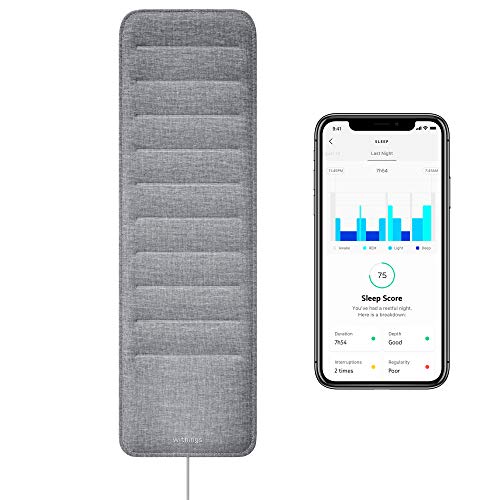
Withings Sleep Tracking Mat
Under-mattress sensor that tracks sleep cycles, heart rate, and snoring without wearing anything
Check Price on AmazonThe Monitoring Dashboard Approach
Think of this like a dashboard for your parent’s daily life. You are not watching them minute by minute. You are tracking patterns and looking for deviations. Did they sleep last night? Did they get out of bed this morning? Has someone come to the door? Is there a water leak under the sink? Has their weight changed dramatically?
Each piece of data on its own is a small signal. Together, they paint a picture of daily life that is far more accurate than a twice-weekly phone call. And when multiple signals change at the same time (sleep disrupted, weight dropping, less movement around the house), you have early warning that something is wrong before it becomes a crisis.
Here is how to build that dashboard, sensor by sensor.
Layer 1: Sleep Monitoring
Sleep is the single most informative health metric you can track remotely. As covered in detail in our bedroom safety guide, sleep patterns change before almost every health event. UTIs, pain flare-ups, depression, medication side effects, and heart problems all show up in sleep data first.
The Withings Sleep Mat slides under the mattress and tracks sleep duration, sleep quality, nighttime wake-ups, resting heart rate, and breathing rate. Your parent does not wear anything or do anything. They just sleep. The data appears in the Withings app, which you can access as a shared user from anywhere in the world.
What to watch for:
- Baseline changes. After two weeks, you will have a clear picture of normal. Your parent typically sleeps 7 hours, wakes twice, has a resting heart rate of 68. Any sustained deviation from that baseline deserves attention.
- Nighttime wake-up increases. Going from two wake-ups to five over a few days strongly suggests a UTI or bladder issue. Call the doctor, not your parent. “Mom says she is getting up more at night and I am wondering about a UTI” gets action faster than waiting for her to mention it.
- Heart rate trends. A resting heart rate that climbs steadily over weeks can indicate infection, dehydration, heart failure, or thyroid issues. This is data your parent’s cardiologist would love to have.
- Sleep duration drop. If your parent goes from 7 hours to 4 hours over a two-week period, something is causing pain, anxiety, or discomfort that is keeping them awake. This is a data point worth a gentle conversation about.
Layer 2: Weight Tracking
Unexplained weight changes in older adults are medically significant. Rapid weight gain can indicate fluid retention from heart failure. Rapid weight loss can indicate depression, difficulty preparing meals, dental problems, or a serious underlying condition. Gradual weight loss over months may mean your parent is simply not eating enough, which is alarmingly common among seniors living alone.
A connected scale like the Withings Body+ automatically records weight and sends it to the same app as the sleep mat. Your parent just steps on the scale each morning (or however often they normally weigh themselves). No buttons to press, no data to enter. The scale recognizes them automatically and logs the measurement.
What to watch for:
- Sudden weight gain (3+ pounds in a few days). For a parent with heart failure, this is a red flag that fluid is accumulating. Most cardiologists give patients a threshold (“Call us if you gain more than 3 pounds in 48 hours”). A connected scale makes it easy to catch this even if your parent does not think to call.
- Gradual weight loss (5+ pounds over a month). This could mean reduced appetite, difficulty shopping for groceries, trouble cooking, dental pain that makes eating hard, or depression. Any of these warrants a conversation and possibly a visit.
- Weight stability. Stable weight over weeks and months is actually good news. It means your parent is eating and hydrating consistently. The absence of change is reassuring data too.
Layer 3: Door Activity
A video doorbell does double duty as a security device and an activity monitor. It records every time someone approaches the front door, rings the bell, or enters and exits. For long-distance caregiving, the activity log is as valuable as the live video.
What the doorbell activity tells you:
- Is your parent leaving the house? If the doorbell detects outgoing motion every morning, your parent is getting out, which is a good sign of independence and activity. If the doorbell shows no activity for two or three days, your parent may be isolated, unwell, or immobilized.
- Are caregivers showing up? If a home health aide is supposed to arrive every Tuesday and Thursday at 9 AM, the doorbell confirms it. If the aide does not show up, you know immediately and can make alternative arrangements.
- Are there unexpected visitors? Repeated visits from people you do not recognize can be a red flag for scam targeting. Seniors who live alone are frequent targets for door-to-door fraud, and the doorbell gives you a record of who is coming around.
- Is the neighbor checking in? If you have arranged for a neighbor to look in on your parent periodically, the doorbell confirms those visits without requiring the neighbor to call you each time.
Layer 4: Environmental Monitoring
Environmental sensors protect the house when your parent may not notice a problem developing.
Water leak sensors are the highest priority environmental monitor. A slow leak under the bathroom sink or around the water heater can go undetected for days or weeks. Your parent may not check behind the toilet or under the sink. Mold can develop. Wood can rot. And a water-damaged floor becomes a fall hazard. A $15 water sensor sends an alert to your phone the moment moisture is detected where it should not be.
Place sensors in these locations:
- Under the kitchen sink
- Behind the toilet in every bathroom
- Next to the water heater
- Near the washing machine
- In the basement near the sump pump (if applicable)
Other environmental sensors to consider:
- Smart thermostat. Tells you the temperature inside the home. If the furnace fails in January and the interior temperature drops to 55 degrees, you will know before your parent gets hypothermic. It also shows if your parent is setting the thermostat to unusual temperatures, which can indicate confusion.
- Smart smoke and CO detectors. Send fire and carbon monoxide alerts directly to your phone. If an alarm goes off at your parent’s house, you know immediately and can call 911 or a neighbor.
Building the Dashboard Without Cameras
Notice that none of these monitoring layers involve a camera inside the home. That is intentional. Indoor cameras create more problems than they solve in most caregiving situations.
The privacy cost is obvious: your parent loses the dignity of unobserved life in their own home. But there are practical problems too. Cameras can be unplugged (intentionally or accidentally). They make home health aides uncomfortable and can make it harder to retain good caregivers. They create a false sense of security because you cannot watch a camera feed 24 hours a day. And they can damage the parent-child relationship if your parent feels surveilled rather than supported.
The sensor-based approach gives you better information for caregiving decisions without any of those downsides. You know whether your parent slept well, whether they are maintaining their weight, whether they are leaving the house, and whether the home environment is safe. That is more useful than a camera feed showing your parent watching TV in the living room.
Setting Up Alerts That Work
The difference between useful monitoring and anxiety-inducing monitoring is in how you configure alerts. Too many alerts and you will start ignoring them. Too few and you miss critical changes.
Here is a practical alert framework:
Immediate alerts (push notification to your phone):
- Smoke or CO alarm triggered
- Water leak detected
- No sleep data recorded (meaning your parent did not sleep in their bed last night)
- Home temperature below 60 or above 90 degrees
Daily summary (check once per morning):
- Last night’s sleep duration and quality
- Number of nighttime wake-ups
- Today’s weight (if recorded)
Weekly review (check during a quiet moment):
- Sleep trends over the past seven days
- Weight trend over the past seven days
- Door activity patterns
- Any sensor alerts that were triggered during the week
This structure keeps you informed without making monitoring a full-time job. The immediate alerts catch emergencies. The daily summary gives you a quick pulse check. The weekly review lets you spot trends.
Respecting Privacy While Staying Informed
The ethical dimension of remote monitoring deserves a direct conversation with your parent. Installing sensors without their knowledge is a violation of trust, even if your intentions are good. If they discover the monitoring on their own (and they will), the damage to your relationship may be worse than the safety risk you were trying to address.
Here is how to approach the conversation:
Be honest about why. “I worry about you living alone, and I want to find a way to worry less without bothering you with constant phone calls.” This frames the monitoring as a benefit to both of you, not just to your peace of mind.
Be specific about what you will see. “The mat under the mattress tells me if you slept well. The scale tells me your weight. The doorbell tells me if someone comes to the door. None of these have cameras or microphones. I cannot see you or hear you. I just know you are okay.”
Give them control. If your parent is uncomfortable with any specific sensor, respect that. The monitoring system only works if your parent feels it supports their independence rather than undermines it. A parent who unplugs the sensors or refuses to step on the scale is a parent who does not feel respected in the process.
Revisit the conversation periodically. As your parent’s needs change, the monitoring may need to change too. What was acceptable a year ago may feel intrusive now, or vice versa. Check in about how they feel about the setup every few months.
When Remote Monitoring Is Not Enough
Remote monitoring is a powerful tool, but it has limits. It does not cook meals. It does not drive to the pharmacy. It does not provide companionship. And for some situations, no amount of technology can substitute for a person being physically present.
Signs that remote monitoring alone is no longer sufficient:
- Frequent falls. If the sleep mat shows your parent getting up many times per night and you are getting reports of falls, they may need overnight care or a safer living arrangement.
- Significant weight loss. If the scale shows a steady decline despite your conversations about eating, your parent may need meal delivery, a personal care aide, or help with grocery shopping.
- Increasing confusion. If doorbell activity shows your parent leaving the house at unusual hours or not recognizing regular visitors, cognitive decline may have progressed to a point where living alone is unsafe.
- Social isolation. If the only door activity is you checking the camera and the weekly aide visit, your parent is isolated. Technology cannot fix loneliness. A more social living arrangement, adult day programs, or increased in-home companionship may be needed.
Remote monitoring buys time. It extends the window during which your parent can safely live independently. But it is not a permanent solution for every situation. Use the data it provides to make informed decisions about when additional support, a closer living arrangement, or a different level of care becomes necessary. The data will tell you when that time comes, often before the crisis that would otherwise force the decision.