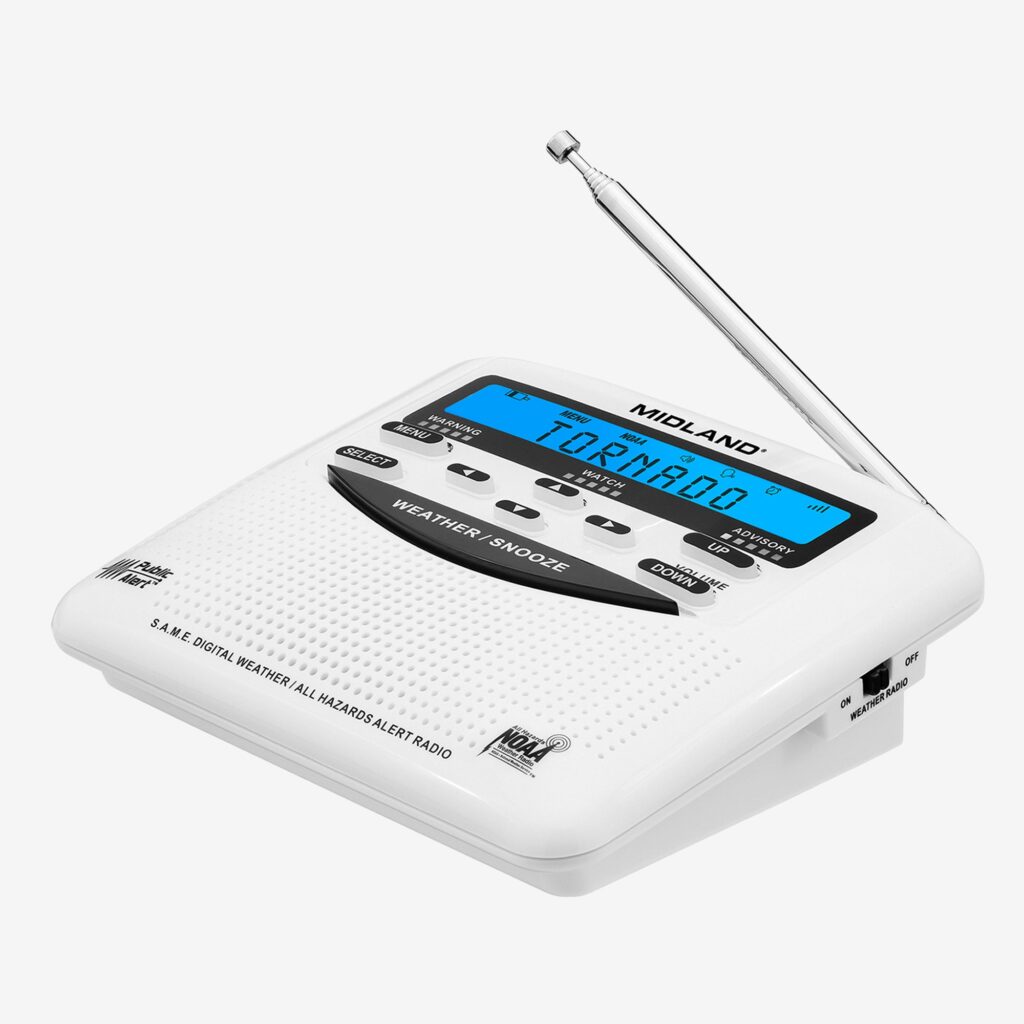
The Alert That Doesn’t Need the Internet
In April 2023, a tornado touched down in rural Arkansas at 2:14 AM. Doris, 79, was asleep in her single-story home half a mile from the tornado’s path. Her cell phone was charging in the kitchen, set to silent mode. She didn’t have a weather app configured for push notifications. The tornado sirens in town were three miles away and she couldn’t hear them with the windows closed.
What woke Doris up was her Midland weather radio. The alarm blared from her bedside table loud enough to startle her awake instantly. The voice broadcast that followed told her exactly what was happening: tornado warning for her county, take shelter immediately. Doris grabbed her walker, moved to the interior bathroom, and sat in the tub with a pillow over her head, just like the emergency plan her son had helped her practice. The tornado passed nearby, knocking branches into her yard but sparing her home.
Her son had bought the radio for $35 and programmed it during a visit six months earlier. He thought of it as cheap insurance. After that night, Doris called it the best $35 anyone ever spent on her.
Who This Is For (and Who It’s Not For)
The Midland WR120B is essential for seniors who live alone, especially in areas prone to tornados, severe thunderstorms, flash flooding, or hurricanes. When a dangerous weather event happens at 3 AM, the critical question is: how will your parent find out in time to take shelter? Smartphone weather apps are great, but they require the phone to be nearby, charged, not on silent mode, and connected to cell service. All of those conditions can fail simultaneously during severe weather.
This radio is also valuable for seniors in rural areas where cell service is unreliable and outdoor warning sirens may not be audible from inside the house. It receives alerts directly from NOAA transmitters using radio frequencies that work independently of all other communication systems.
This is not necessary for seniors who live in apartment buildings or assisted living facilities with their own alert systems, or for people in regions where severe weather is extremely rare. It also won’t help much if your parent has severe hearing loss and cannot hear the alarm. In that case, consider a weather radio model with a bed shaker accessory (Midland makes one) that physically vibrates the mattress during an alert.
Why This Product
Midland has been making weather radios for decades and is the most recognized name in the category. The WR120B is their most popular model because it hits the sweet spot between features and simplicity. It does what a weather radio needs to do (receive NOAA alerts and sound an alarm) without unnecessary complexity that drives up the price or confuses users.
More expensive weather radios include AM/FM tuners, flashlights, hand cranks, and solar panels. Those features are great for emergency preparedness kits, but for a bedside alert device that needs to sit there and work every single time, simpler is better. The WR120B plugs into the wall, has battery backup, and monitors NOAA broadcasts 24 hours a day. There are fewer components to fail and fewer buttons to accidentally press.
The SAME county programming is the feature that separates this from the cheapest weather radios. Without SAME filtering, the radio alerts you to every warning in the entire broadcast region, which can cover dozens of counties. At 2 AM, you don’t want to be woken up for a thunderstorm warning three counties away. With SAME programming, you only hear alerts for your specific county. This dramatically reduces false alarms and means that when this radio goes off, it’s genuinely relevant to your safety.
Key Features That Matter for Seniors
Automatic Alert Monitoring: The radio monitors all seven NOAA Weather Radio frequencies automatically, even in standby mode when no sound is playing. When an alert is broadcast for your programmed county, the alarm activates within seconds. You don’t need to have the radio “on” and playing to receive alerts. Just plugged in and in standby.
SAME County-Specific Filtering: Program up to 25 specific county FIPS codes so the radio only alerts you to weather events in your immediate area. This eliminates the constant false alarms that cause people to ignore weather radios or turn them off entirely. When this radio sounds, it means your county has a warning.
Loud Alarm Tone: The alert tone is significantly louder than a smartphone notification. It is specifically designed to wake people from sleep. For seniors who are hard of hearing, the volume and the harsh tone of the alarm cut through in a way that a phone buzz on a nightstand cannot. Place the radio on the bedside table for maximum effectiveness.
Battery Backup: The radio runs on wall power with three AA batteries as backup. During a power outage, it switches to batteries automatically without losing its programming or alert capabilities. This is critical because severe weather and power outages often happen simultaneously.
Alert Type Filtering: You can choose which types of alerts trigger the alarm. Most people enable tornado warnings, severe thunderstorm warnings, and flash flood warnings while disabling less urgent watches and advisories. This further reduces unnecessary activations while keeping the critical alerts active.
Setup: What to Expect
Physical setup is simple. Plug the radio into a wall outlet near your parent’s bed. Insert three AA batteries for backup power. Extend the antenna on top of the radio for better reception.
Programming the SAME county code is the only step that requires some effort. Look up your parent’s county FIPS code on the NOAA website (weather.gov/nwr/counties). It’s a six-digit number. Enter it into the radio using the buttons on the front panel, following the instructions in the included manual. This takes about five minutes if you follow the steps carefully. Once programmed, you never need to do it again unless your parent moves to a different county.
After programming, test the radio by waiting for the next weekly test broadcast from NOAA (these happen every Wednesday in most areas) or by using the radio’s built-in alert test function. Make sure the alarm is loud enough to hear from the bed with the bedroom door closed. Adjust the alarm volume if needed. Show your parent what the alarm sounds like so they’re not startled the first time it goes off for a real event. Practice the response plan: when you hear this alarm, go to the bathroom and close the door.
What to Know Before Buying
NOAA Weather Radio coverage reaches about 95% of the U.S. population, but reception can be weaker in remote rural areas, valleys, or locations far from a NOAA transmitter. Before relying on this radio, verify that your parent can receive a clear NOAA signal. Tune to one of the seven NOAA frequencies (listed in the manual) and check for clear audio. If the signal is weak, try repositioning the antenna or moving the radio closer to a window.
Replace the backup batteries every year, even if they haven’t been used. Dead backup batteries defeat the purpose of having battery backup during a power outage. Set a calendar reminder to swap them out every spring when daylight saving time starts, which is already a popular time to check smoke detector batteries.
This radio is a backup alert system, not a complete emergency plan. Make sure your parent has a designated safe room (usually an interior bathroom or closet on the lowest floor), a flashlight within reach, and comfortable shoes nearby in case they need to walk through debris. The radio tells them when to take shelter. The plan tells them where to go and what to bring. Both pieces matter, and the radio is only useful if your parent knows what to do when it goes off.