End the Volume War
Every evening at 7 PM, the same argument started in the Kowalski household. Ray, 76, turned the TV up to 42 because he couldn’t hear the dialogue on his crime shows. His wife Diane turned it back down to 28 because the noise gave her a headache. Ray would inch it back up. Diane would grab the remote. After forty-three years of marriage, the TV volume had become their biggest daily conflict.
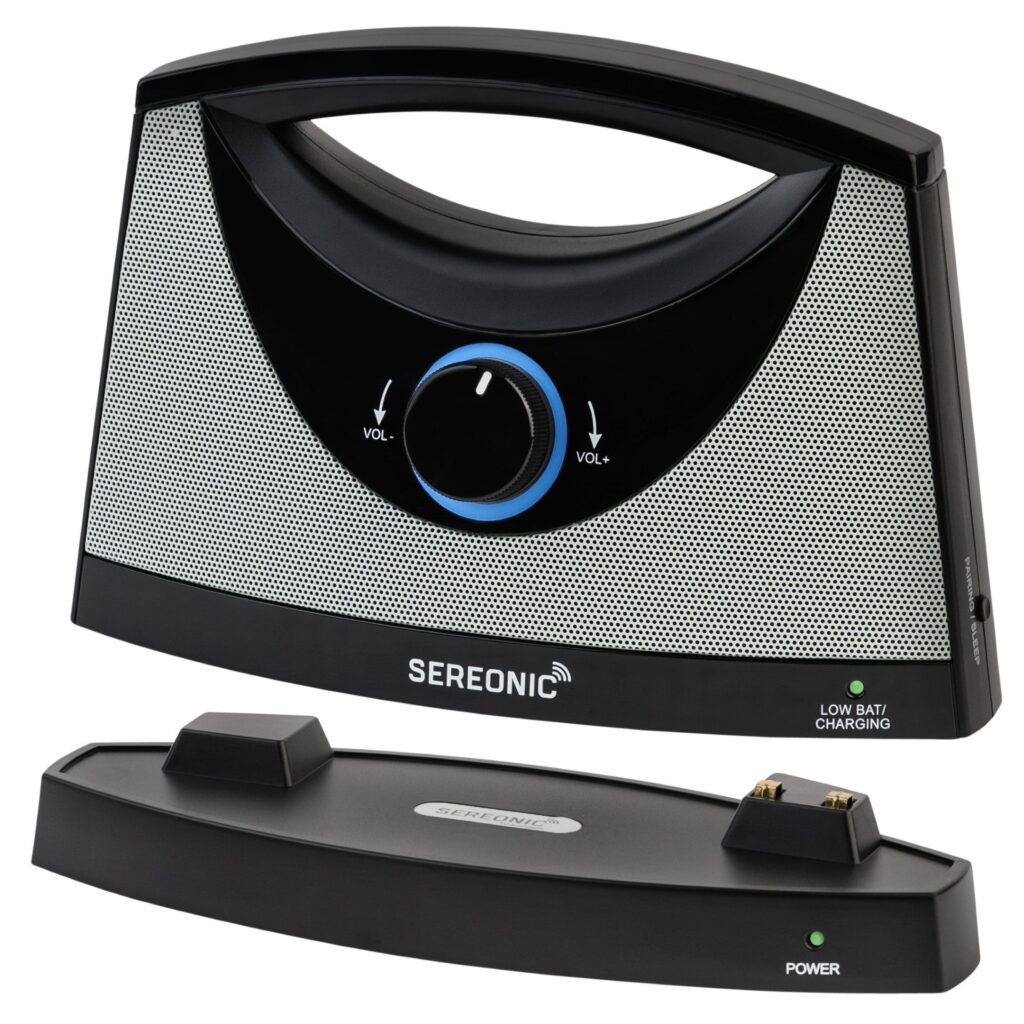
Their daughter suggested the Serene Innovations TV SoundBox after reading about it in a caregiving forum. The concept was simple. A small transmitter plugs into the TV. A wireless speaker sits on the end table next to Ray’s recliner. Ray controls his own volume on the speaker. Diane controls the TV volume with the regular remote. Both hear the same show at the level that works for them.
The first night they used it, Diane said the house felt peaceful for the first time in years. Ray heard every word of his show. Diane read her book in the same room without earplugs. “I wish we’d bought this five years ago,” Ray told their daughter.
Who This Is For (and Who It’s Not For)
The TV SoundBox is perfect for households where one person has hearing loss and another doesn’t. This is an incredibly common situation. Age-related hearing loss is gradual, and the person experiencing it often doesn’t realize how loud they’ve cranked the TV until a spouse or visitor points it out. If your parent lives with a partner and the TV volume has become a source of tension, this product solves that specific problem elegantly.
It’s also useful for seniors who watch TV late at night and don’t want to disturb a sleeping partner. The speaker delivers audio right next to them while the TV can be muted entirely.
This is not a replacement for hearing aids. If your parent struggles to hear conversations, phone calls, and sounds throughout daily life, they need a proper hearing evaluation. The SoundBox only helps with TV audio. It is also not the best choice for someone who watches TV alone, since they can just turn up the regular volume. The value is in the shared listening situation.
Why This Product
Wireless TV headphones are the most common recommendation for this problem, and they work well for some people. But many seniors dislike wearing headphones for hours. They feel isolating, they’re uncomfortable with hearing aids, and they make it hard to hear someone talking to you in the room. The SoundBox avoids all of these issues because it’s an open speaker, not a headphone. You still hear everything around you.
TV soundbars with voice enhancement features are another option, but they raise the volume for everyone in the room. They don’t solve the fundamental problem of two people needing different volumes. The SoundBox is the only approach that gives each person independent volume control without headphones.
The setup simplicity also matters. There is no Bluetooth pairing that drops out, no app to configure, no WiFi network to connect to. The transmitter and speaker communicate on their own dedicated wireless frequency. Plug it in, turn it on, done. For seniors who struggle with technology, this reliability is essential.
Key Features That Matter for Seniors
Independent Volume Control: The speaker has its own large volume dial right on top. Your parent adjusts their listening volume without affecting the TV at all. This is the core feature, and it works exactly as you’d expect. Turn it up, hear more. Turn it down, hear less. The TV volume stays wherever the other person set it.
Tone Control for Voice Clarity: A tone adjustment knob lets you boost higher frequencies where human speech lives. This helps separate dialogue from background music and sound effects, which is the biggest complaint among seniors watching TV. Voices sound clearer and more distinct.
No-Pairing Wireless Connection: The transmitter and speaker pair automatically and permanently. There’s no Bluetooth to reconnect, no “searching for devices” screen, no troubleshooting. If the speaker is on and the transmitter is plugged in, they connect. Every single time.
Rechargeable and Portable: The speaker has a built-in rechargeable battery that lasts 6-8 hours. You can carry it to your chair without any cords. When the battery runs low, place it on the included charging cradle overnight. You can also use it while charging if you prefer.
Compact and Unobtrusive: The speaker is about the size of a small book. It sits on an end table or armrest without taking up much space. It doesn’t look medical or clinical. It looks like a small portable speaker, which most seniors prefer.
Setup: What to Expect
Setup takes about five minutes and requires no technical knowledge. Connect the transmitter to your TV’s audio output using the included cable. Most TVs have a 3.5mm headphone jack or RCA audio outputs on the back. If your TV only has optical audio output, you’ll need an optical-to-RCA adapter (not included, about $10 on Amazon). Plug the transmitter into a power outlet near the TV.
Turn on the speaker. It finds the transmitter automatically and audio starts playing within seconds. Adjust the volume and tone to your liking. Place the speaker wherever it’s most comfortable, usually on the end table next to your chair or on the armrest.
If you’re setting this up for a parent, the only tricky part is finding the right audio output on the back of the TV. Take a photo of the TV’s back panel ports and compare them to the included quick-start guide. Once the cable is connected, everything else is plug and play. Label the transmitter “DO NOT UNPLUG” so a well-meaning visitor doesn’t disconnect it while cleaning.
What to Know Before Buying
The most important thing to check before ordering is that your TV has an audio output port. Most TVs made in the last ten years have either a 3.5mm headphone jack, RCA outputs (red and white plugs), or an optical output. If your TV only has an optical output, budget an extra $10 for an adapter. Smart TVs connected through cable boxes or streaming devices can often output audio from the cable box instead, which sometimes has more audio port options.
The speaker battery lasts 6-8 hours with continuous use. If your parent watches TV for longer stretches, they can use the speaker while it sits on the charging cradle. The cradle connects to a wall outlet, so you just need a power outlet near their chair. Many families keep the speaker on the cradle permanently and only go wireless when moving it to a different spot.
Sound quality is tuned for voice clarity, not music richness. This is a deliberate design choice. The speaker makes dialogue easier to understand, which is what most seniors need from TV audio. If your parent is an audiophile who wants rich bass and concert-quality sound, this isn’t built for that. It’s built to make every word on the evening news crystal clear.