Is the Uplift Premium Transfer Board Worth It for Your Loved One?
Managing mobility challenges is a significant concern for many seniors and their families. The Uplift Premium Transfer Board aims to ease these challenges by providing a reliable way to transfer between surfaces like beds and wheelchairs. This product is especially helpful for individuals with limited lower body strength who need assistance moving between seated positions. If easy and safe transfers reduce the risk of injury and offer more independence, the Uplift board could be a valuable tool to consider.
As people age, issues like decreased muscle strength and balance can make simple movements risky. Professional caregiver assistance can be costly, and not everyone has the luxury of regular in-home help. Priced at around $59.99, the Uplift Premium Transfer Board offers an affordable alternative to hiring daily assistance, allowing family members to participate in caregiving with more confidence. Our research indicates that this product effectively bridges the mobility gap for many seniors, making it our recommended choice for those seeking a portable, low-cost transfer solution.
Who This Is For (and Who It’s Not For)
The Uplift Premium Transfer Board is ideal for seniors who are generally mobile but need occasional assistance with transfers, such as moving from a bed to a wheelchair or from a recliner to a walker. It suits those who have some upper body strength to help guide their movement, often in partnership with a caregiver. For families who can provide some assistance but lack the means for constant professional help, this board offers a practical, budget-friendly tool.
However, if the individual in question lacks upper body strength or has severe mobility restrictions that prevent them from actively participating in their transfers, this board may not be the best choice. In such cases, a patient lift or hoist might be more appropriate. Additionally, if you already have a transfer system integrated into your living space, adding an extra board could be redundant. Alternatively, those with cognitive impairments, such as advanced dementia, may benefit more from a solution that includes caregiver-operated mechanical lifts to ensure safety.
Why This Beats the Alternatives
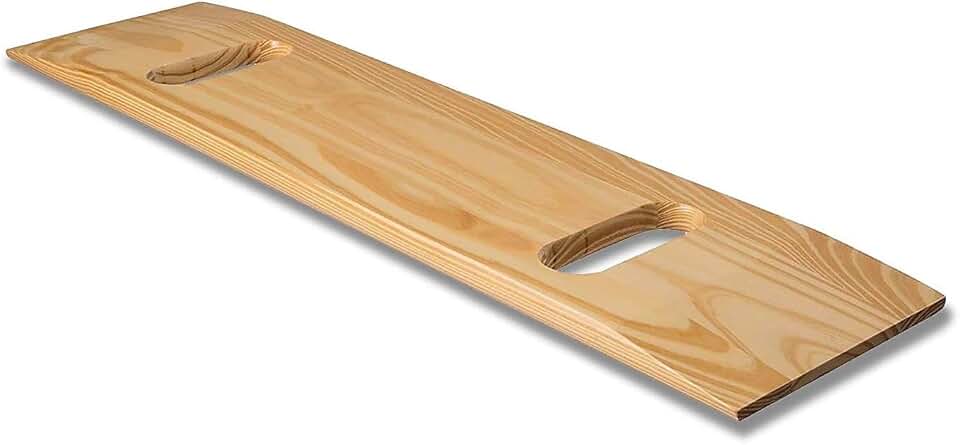
The Uplift Premium Transfer Board stands out among alternatives like the DMI Deluxe Wood Transfer Board due to its lightweight design, making it easier for caregivers to handle and reposition. The board’s smooth finish reduces friction, allowing for easier sliding across various surfaces, which is essential for both the comfort and safety of the user. Additionally, its affordability makes it an accessible option for many families without compromising on quality.
Compared to other products like the Beasy Board, the Uplift board offers similar functionality at a lower price point, making it an attractive choice for those seeking value without sacrificing reliability. Its portability and ease of use further distinguish it as a practical tool for everyday transfers.
Key Features That Matter for Seniors
Lightweight Design: Weighing just a few pounds, this board is easy to maneuver for both the caregiver and the user. Its lightweight nature reduces the physical strain on caregivers, making it feasible for frequent use without causing fatigue.
Smooth Surface Finish: The board’s smooth finish ensures minimal friction during transfers, which is crucial for avoiding skin irritation and ensuring a gentle movement. This feature helps reduce discomfort for the senior while transferring between surfaces.
Sturdy Construction: Made from high-quality materials, the Uplift board offers a robust structure capable of supporting a reasonable amount of weight, suitable for most seniors. This durability ensures longevity and reliability, which are crucial for safety in repeated use.
Non-slip Grips: The board includes non-slip grips on the bottom, providing stability during transfers. This feature is particularly important to prevent slipping and ensure a secure attachment to surfaces during use.
Portability: With its compact size, this board is easy to transport, making it convenient for travel or moving between different locations within the home. This flexibility allows caregivers to assist wherever needed, enhancing its utility.
Setup: What to Expect
Setting up the Uplift Premium Transfer Board is straightforward and can typically be done in under 15 minutes. Initially, you will want to identify the surfaces that require transfer assistance, such as a bed, wheelchair, or a favorite chair. Position the board to bridge the gap between these surfaces, ensuring that it is securely placed with the non-slip grips in contact with the surface.
After physical setup, no additional configuration is necessary, as the board does not require any digital pairing or software adjustments. Caregivers should practice a few trial transfers to familiarize themselves with the board’s handling and ensure they can guide the senior safely. This step is crucial for gaining confidence in the board’s use and ensuring the senior’s comfort during actual transfers.
What to Know Before Buying
There are no recurring fees or subscription requirements with the Uplift Premium Transfer Board, making it an economical one-time purchase. However, it’s important to regularly check the board for signs of wear to ensure it remains safe for use. Over time, if the board becomes worn, replacement might be necessary to maintain safety standards.
Consider the limitations of this transfer board, such as the need for user participation in transfers. It is crucial that the senior has adequate upper body strength and cognitive ability to assist in their movement. Additionally, while the board is designed to be strong and durable, its effectiveness is contingent on proper use and maintenance. Regular inspection for cracks or damage will help ensure its longevity and safety.