Beyond the Spot Check
Frank, 72, has moderate COPD and uses supplemental oxygen at night. For years, his wife Carol would wake up two or three times a night to check the fingertip oximeter clipped on his finger. Half the time it had fallen off. The other half, she had to squint at the tiny screen in the dark. One morning she found his oxygen had been at 84% and neither of them knew how long. Their pulmonologist suggested continuous overnight monitoring. That is when they found the Wellue O2Ring.
Now Frank wears the ring to bed every night. If his oxygen drops below 88%, the ring vibrates on his finger until he adjusts his position or checks his oxygen tubing. Carol sleeps through the night for the first time in years. Their doctor reviews the overnight reports at every appointment and has adjusted Frank’s oxygen flow rate twice based on the data.
Who This Is For (and Who It’s Not For)
The Wellue O2Ring is built for anyone who needs more than an occasional spot check of their blood oxygen levels. That includes seniors with COPD, sleep apnea, congestive heart failure, pneumonia recovery, or any condition where oxygen saturation can drop dangerously during sleep. It is also valuable for post-surgical monitoring at home when a doctor wants to keep an eye on overnight oxygen levels.
This is NOT the right choice if you just want a quick daily SpO2 reading. For that, a $25 fingertip pulse oximeter does the job fine. The O2Ring is specifically designed for continuous monitoring over hours, not one-time checks. It is also not a replacement for a clinical sleep study. If your doctor suspects sleep apnea and wants a formal diagnosis, you will still need an in-lab or at-home sleep test.
Why the Wellue O2Ring
Most consumer pulse oximeters clip onto a fingertip and show you a number on a tiny screen. You look at it, note the reading, and take it off. That approach has two problems for overnight monitoring. First, fingertip models fall off during sleep. Second, they do not record data or alert you when something goes wrong.
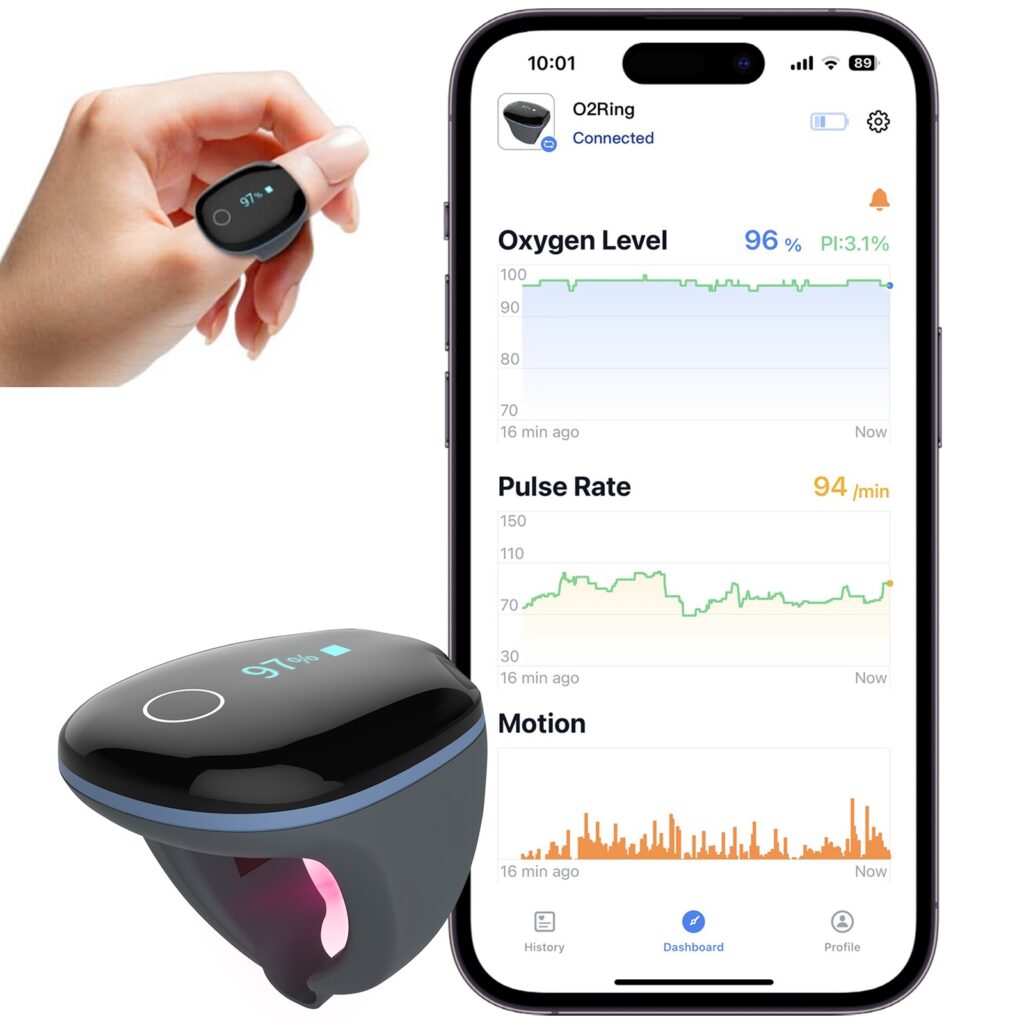
The O2Ring solves both problems with a simple but effective design. It wraps around a finger like a ring and stays in place all night. A built-in sensor reads your oxygen saturation and heart rate continuously, sampling every few seconds. The onboard memory stores up to four nights of data even without a phone connected. And the vibration alert is the feature that matters most. When your SpO2 drops below the threshold you set, the ring buzzes on your finger. It is not loud enough to wake a partner, but it is persistent enough to rouse you so you can adjust your sleeping position or check your equipment.
The rechargeable battery lasts over 16 hours on a single charge, which means you can wear it for a full night and well into the next day if needed. Charging takes about two hours with the included USB cable.
Key Features That Matter for Seniors
Continuous SpO2 Monitoring: Reads oxygen saturation every few seconds throughout the night, building a complete picture of your breathing patterns. This catches dips that a single reading would miss entirely.
Vibration Alerts: Customizable alerts vibrate when SpO2 drops below your set threshold (adjustable from 80% to 95%). You can also set heart rate alerts for both high and low values. The vibration intensity is adjustable from gentle to strong.
Detailed Reports: The free ViHealth app generates overnight reports showing SpO2 trends, heart rate, motion, and oxygen desaturation events in a clean, readable format. Reports can be exported as PDFs and emailed directly to your doctor.
Comfortable Ring Design: The soft, flexible inner cushion fits comfortably on most fingers without cutting off circulation. It weighs just 0.3 ounces, so you barely notice it during sleep.
Offline Data Storage: The ring stores up to four sessions of data internally. You do not need your phone next to you while sleeping. Sync the data to the app in the morning when it is convenient.
Setup: What to Expect
The O2Ring is straightforward to set up. Charge it fully using the USB cable (about two hours). Download the free ViHealth app on an iPhone or Android phone. Turn on the ring by pressing the small button, and pair it with the app via Bluetooth. The whole process takes about ten minutes.
Setting the alert thresholds is the most important step. If your loved one has a pulmonologist or primary care doctor managing their condition, ask what SpO2 level should trigger an alert. For most COPD patients, doctors recommend alerting at 88% or 90%. For sleep apnea patients, 90% to 92% is common. You can always adjust these later in the app.
For seniors who are not comfortable with smartphone apps, an adult child can set everything up during a visit. Once configured, the senior just needs to put the ring on at bedtime and press the button to start recording. In the morning, the caregiver can sync and review the data remotely if the app is installed on both phones.
What to Know Before Buying
The O2Ring costs more than a basic fingertip oximeter, but the two products serve different purposes. A fingertip model is fine for a quick check. The O2Ring is for people whose doctors want to see what happens over eight hours of sleep. If your parent has been told their oxygen dips at night, or if they use a CPAP or supplemental oxygen, the continuous data this ring provides is genuinely useful.
The ring comes in one standard size that fits most adult fingers. It uses a flexible silicone interior that adjusts to different finger widths. However, people with very thin fingers may find it slides off during sleep. Wellue sells an optional silicone adapter for smaller fingers. If you are unsure about fit, measure first.
There is no monthly subscription fee. The app is free and the reports are free. You buy the ring once and use it as long as it lasts. This is a meaningful advantage over subscription-based health monitoring services.