Choosing between a standard walker, a rollator, and a transport wheelchair is one of the most common decisions families face when a parent starts having trouble getting around. Pick the wrong one and it sits in the closet. Pick the right one and your parent stays active, independent, and safer on their feet.
This guide breaks down the real differences between mobility aids, who each one is best for, and what features to look for when shopping.
Who Needs a Mobility Aid?
The honest answer is: more seniors than currently use one. Many older adults resist using a walker because they associate it with frailty, but the numbers tell a different story. Falls are the leading cause of injury death in adults over 65, and most falls happen during walking. A mobility aid is not a sign of giving up — it is a tool that extends independence.
Consider a mobility aid if your parent:
- Has fallen or had near-falls in the past six months
- Grabs furniture or walls for support when walking
- Avoids going out because they feel unsteady
- Tires quickly when walking more than a block
- Has balance-affecting conditions like arthritis, Parkinson’s, neuropathy, or recovering from surgery
- Uses a cane but still feels unstable
Standard Walkers (No Wheels)
How They Work
The classic aluminum frame walker with four rubber-tipped legs. The user lifts it, places it forward, then steps up to it. No wheels, no moving parts.
Best For
- Seniors who need maximum stability and weight-bearing support
- Post-surgery recovery (especially hip or knee replacement)
- Short-distance use inside the home
- People with severe balance problems who need to control their speed
Limitations
Standard walkers are slow and tiring because they require lifting with each step. They do not work well outdoors on uneven surfaces. They have no seat, so there is nowhere to rest if your parent gets tired. Most physical therapists now recommend them mainly for short-term post-surgical recovery rather than long-term daily use.
Rollator Walkers (Four Wheels with Seat)
How They Work
A rollator has four wheels, hand brakes, a padded seat, and usually a storage basket or pouch. The user walks behind it, pushing it forward naturally without lifting. When they need to rest, they engage the brakes and sit on the built-in seat.
Best For
- Seniors who walk moderate to long distances (shopping, parks, neighborhood walks)
- Anyone who needs to sit and rest frequently
- Outdoor use on sidewalks, paths, and stores
- Seniors who are fairly mobile but lack endurance or confidence
- Long-term daily use
Limitations
Rollators provide less stability than standard walkers because they roll freely. A senior who leans heavily on the walker for weight-bearing support might push the rollator away from them and fall. The hand brakes require grip strength, which can be an issue for seniors with severe arthritis. They are also bulkier and heavier than standard walkers, which makes them harder to transport.
Three-Wheel Rollators
How They Work
Similar to a four-wheel rollator but with one front wheel instead of two. This triangular design makes them lighter, more maneuverable, and easier to steer in tight spaces.
Best For
- Navigating tight indoor spaces like narrow hallways and small bathrooms
- Seniors who need less support and mainly want confidence while walking
- Traveling — they fold more compactly than four-wheel models
Limitations
Most three-wheel rollators do not have a seat, which removes one of the biggest advantages of a rollator. They are also less stable than four-wheel models on uneven ground.
Walking Canes
When a Cane Is Enough
A cane is appropriate for seniors who have mild balance issues or slight weakness on one side but can still support most of their weight independently. If your parent only needs a little extra stability — a gentle reminder that support is there — a cane might be all they need.
When to Move Beyond a Cane
If your parent leans heavily on the cane, uses two canes, or still feels unsteady with a cane, it is time to consider a walker or rollator. A cane that is doing too much work for an unstable user can actually cause falls by creating a false sense of security.
What to Look for When Shopping
Height Adjustment
Any mobility aid must be the correct height. When standing upright with arms at their sides, the handles should align with your parent’s wrist crease. Too high causes shoulder strain; too low causes hunching. Almost all walkers and rollators offer adjustable handles, but double-check the range matches your parent’s height.
Weight Capacity
Standard models typically support 250-300 pounds. Bariatric models support 400-500 pounds. Check the rating — exceeding it is a safety risk.
Folding and Transport
If the mobility aid needs to go in a car regularly, test how it folds. Some rollators fold side-to-side (wider but flatter), others fold front-to-back (narrower but taller). Make sure it fits in your parent’s trunk or back seat.
Weight of the Device
A standard rollator weighs 15-20 pounds. Lightweight models run 12-15 pounds. Ultra-light carbon fiber models can be under 12 pounds but cost significantly more. If your parent will be lifting it into a car, lighter matters.
Brakes
Squeeze brakes (like bicycle brakes) are standard on most rollators. Some seniors with arthritis find them difficult to use. Look for ergonomic brake handles or push-down “parking” brakes as an alternative. Test the brakes before buying — they should lock solidly when engaged.
Seat Comfort
If your parent will use the rollator seat frequently, test it for comfort. A padded seat is better than a hard plastic or mesh one. Also check the seat height — it should be easy to sit down on and stand up from without a struggle.
Recommended Products
Hugo Elite Rollator: A well-built, affordable four-wheel rollator with a padded seat, backrest, and large basket. Weighs about 16 pounds and folds compactly. The 8-inch wheels handle sidewalk cracks and small bumps well. Around $100-130. Our top pick for most seniors.
Drive Medical Nitro Euro Style Rollator: A step up in design with 10-inch front wheels for better outdoor performance. Sleek look that some seniors prefer over medical-looking models. About $150-180. Good for seniors who walk outside frequently.
HurryCane Freedom Edition: For seniors who only need a cane, this foldable option stands up on its own, adjusts height easily, and has a pivoting base that adapts to uneven surfaces. Around $35-40. Good starting point before moving to a walker.
Getting Your Parent to Actually Use It
The best mobility aid is the one your parent will actually use. Here are tips that work:
- Let them choose the color and style. Feeling embarrassed about a medical device is real. Some rollators come in attractive colors and modern designs.
- Start using it for specific situations — grocery shopping, long walks — before expecting all-day use.
- Have a physical therapist fit it. Correct height and posture makes the device feel helpful rather than awkward.
- Point out what it enables rather than what it replaces. “Now you can walk to the park again” beats “You need this because you keep falling.”
Bottom Line
For most seniors who need mobility support, a four-wheel rollator with a seat is the best all-around choice. It lets them walk naturally, rest when needed, carry things in the basket, and maintain their independence. A standard walker is better for short-term post-surgery recovery. A cane is fine for mild balance issues. When in doubt, consult a physical therapist — they can evaluate your parent’s specific needs and recommend the right device. The goal is keeping your parent moving safely, and the right mobility aid makes that possible.
Our Pick: Hugo Elite Rollator Walker
If you’re shopping in this category, here’s our one recommendation.
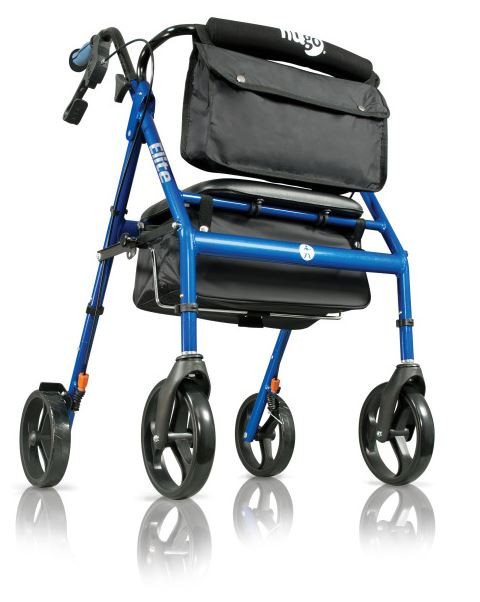
Hugo Elite Rollator Walker
Folding rollator with padded seat, backrest, and one-hand fold
Check Price on Amazon