
Why a Robot Vacuum Is the First Smart Home Device Every Senior Should Own
Of all the gadgets marketed as “smart home technology,” most require a learning curve, a reliable internet connection, and a fair amount of patience to set up. Robot vacuums are different. Once a robot vacuum is running, it works quietly in the background, doing a chore that nobody enjoys, without asking anything of the person who benefits most. For older adults living independently, that combination of low effort and high payoff makes a robot vacuum for seniors one of the most practical purchases a family can make together. This guide explains why, and which model earns our top pick.
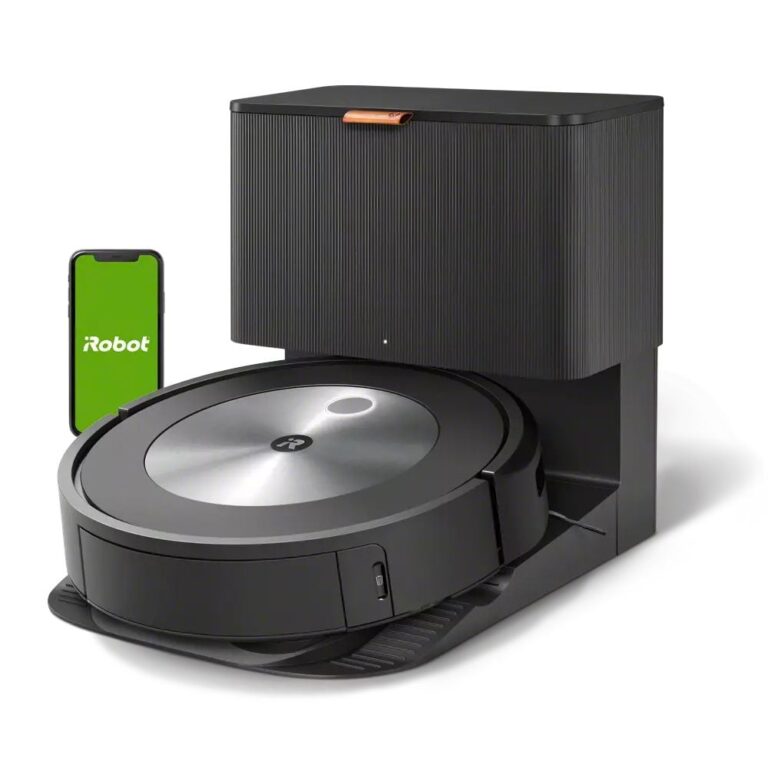
iRobot Roomba j7+
Self-emptying robot vacuum with smart obstacle avoidance
Check Price on AmazonThe Real Reason Floors Matter More as We Age
Keeping floors clean sounds like a minor convenience. In practice, it connects to three things that matter enormously to older adults: safety, mobility, and independence.
Fall Risk Starts on the Floor
The CDC estimates that falls are the leading cause of injury among adults 65 and older, and a significant portion of those falls happen at home. Vacuuming is one of the more physically demanding household tasks. It involves bending, pushing, pulling, and navigating furniture, all while balancing on one foot to move the machine around. For someone with reduced core strength, arthritis in the hands, or any balance issues, this routine chore carries real risk.
A robot vacuum eliminates the task entirely. There is no bending over to pick up the unit, no cord to trip on, and no awkward maneuvering around chair legs. The floor stays clean without anyone having to stand over it.
Clean Floors and Mobility Aids
For seniors who use walkers, canes, or wheelchairs, floor debris is more than an inconvenience. Small objects, pet hair, and grit can catch wheels and tips in ways that interrupt movement or cause a stumble. Wheelchairs track fine particles into every room they roll through, and walker feet pick up debris with each step. A robot vacuum running on a daily or every-other-day schedule keeps those surfaces consistently clear without requiring anyone to plan around it.
Maintaining a Clean Home Supports Independence
Many older adults are determined to stay in their own homes for as long as possible, and for good reason. Familiar surroundings, established routines, and personal autonomy all contribute to mental and physical wellbeing. When keeping up with housework becomes difficult, it can quietly erode that sense of independence, and sometimes triggers conversations about assisted living before anyone is ready.
Robot vacuums are one of the few technologies that genuinely extend independent living. The home stays cleaner with less effort, reducing both the physical burden on the senior and the worry their adult children carry between visits.
What Makes the Roomba j7+ the Right Pick
There are dozens of robot vacuums on the market. Most of them work reasonably well on smooth floors and simple layouts. But for older adults, a few specific features separate a genuinely useful device from one that will sit in a corner creating more problems than it solves.
Obstacle Avoidance That Actually Works
One of the most common frustrations with budget robot vacuums is that they get stuck. They tangle in loose cords, wedge under furniture, push shoes around the room, or flip over a wayward sock and stop in the middle of a run. For a senior living alone, a robot vacuum stranded in the middle of the hallway is a tripping hazard, and getting it free requires the same bending and frustration that the device was supposed to prevent.
The Roomba j7+ uses a front-facing camera combined with iRobot’s PrecisionVision technology to identify and avoid common obstacles in real time. It recognizes phone charger cords, socks, shoes, and pet waste before running into them, and steers around rather than through. In practical terms, this means far fewer stuck robots and far fewer interruptions to cleaning runs.
Self-Emptying Base: The Feature That Changes Everything
Standard robot vacuums require the user to empty a small dustbin after each cleaning cycle, sometimes after every run. That small task involves picking up the unit, locating the dustbin release, and shaking debris into a trash can. It is not difficult for most people, but for someone with arthritis, limited hand strength, or reduced mobility, it can be enough friction to make the device feel like more work than it saves.
The j7+ comes with a Clean Base Automatic Dirt Disposal station that empties the robot’s bin automatically after each run, storing debris in a sealed bag that holds up to 60 days of dirt. In practice, this means a senior can run the robot daily for two months without ever touching the dustbin. When the bag is full, swapping it requires nothing more than lifting a lid and dropping in a new bag.
For adult children setting up the device for a parent, this feature alone is often the deciding factor. It means the device keeps working without requiring regular maintenance from someone who may forget, find it difficult, or simply not notice when the bin is full.
App Control and Caregiver Access
The iRobot Home app allows family members to set cleaning schedules, monitor cleaning history, and start or stop the robot remotely. For an adult child living across town or across the country, this is genuinely useful. If a parent forgets to run the vacuum before guests arrive, a family member can start it remotely. If the robot sends a notification that it is stuck or needs attention, a caregiver can see that alert without having to call and explain what to look for.
The app is also designed with clarity in mind. Schedules are easy to set and visualize, the cleaning map shows exactly where the robot has been, and status messages are plain language rather than error codes.
Seniors who are comfortable with smartphones can manage the robot themselves through voice commands via Amazon Alexa or Google Assistant. Those who prefer to simply let it run on a schedule can set that up once and never open the app again. Both approaches work well.
Addressing Common Concerns
Families researching a robot vacuum for seniors often run into the same set of questions. Here are honest answers to the ones that come up most.
Is It Too Loud?
Robot vacuums are quieter than upright vacuums but not silent. The Roomba j7+ runs at a volume roughly comparable to a box fan on medium. Most people can carry on a conversation in the same room without raising their voices. The Clean Base emptying cycle is noticeably louder but lasts only a few seconds.
For seniors who are sensitive to noise or have hearing aids, scheduling the robot to run during a regular outing, during morning hours when noise is less disruptive, or in a specific room while they are in another part of the house solves the issue entirely. The scheduling feature makes this simple.
What If It Gets Stuck or Falls Down the Stairs?
Modern robot vacuums include cliff sensors that detect drop-offs and prevent the unit from tumbling down stairs. The j7+ has these sensors and has proven reliable on this front across years of consumer use.
Getting stuck does happen occasionally, usually due to a cable on the floor or a piece of furniture with an unusual gap. The j7+’s obstacle avoidance dramatically reduces how often this happens. When it does occur, the robot sends an alert to the app and stops in place, waiting for someone to reposition it. It does not continue grinding against an obstacle or drain its battery trying to free itself.
A quick walk-through of the space before the first few runs, collecting loose cables and placing them out of reach, reduces stuck incidents significantly. After an initial period of learning the layout, most robots develop an efficient route and encounter far fewer obstacles.
What About Pets?
Many seniors have cats or dogs, and the combination of pet hair and robot vacuums is actually one of the strongest use cases for the technology. Pet hair accumulates quickly, and staying on top of it manually is exhausting. A robot vacuum running daily keeps pet hair under control with no effort.
Most cats and dogs adapt to robot vacuums within a few days, either ignoring the device entirely or following it with mild curiosity. For pets that are anxious, scheduling runs during times when the pet is outside or in another part of the house works well.
The j7+’s obstacle avoidance includes recognition of pet waste, a feature that became increasingly important as more households reported the unpleasant results of a robot encountering a surprise on the floor. This is a real-world concern in homes with older dogs or dogs with digestive sensitivities, and the j7+ handles it better than most competitors.
Will It Work on Carpet?
The j7+ handles both hard floors and low-to-medium pile carpet well. It automatically increases suction when transitioning from hard floors to carpet. High-pile shag carpet or very thick rugs can sometimes cause issues, but standard carpet found in most homes is not a problem.
Getting Set Up: What to Expect
Setup typically takes 20 to 30 minutes from unboxing to first run. The process involves placing the Clean Base in a location with a nearby outlet, downloading the iRobot app, and following a short guided setup process. The robot learns the layout of a home through its first few cleaning runs, gradually building a more accurate map that improves its efficiency over time.
For families helping a parent set this up, a good approach is to handle the initial setup yourself during a visit, then schedule the first few cleaning runs before leaving. By the time you are back home, the robot will have completed its first full pass and sent a notification confirming it is working. From that point, the schedule runs automatically and the primary task is occasionally swapping the bag in the Clean Base every month or two.
One practical note: before the first run, do a quick scan of each room for loose cables, fringe rugs with deep fringes that can tangle, and any small objects on the floor. This initial tidy-up takes five minutes and prevents the most common first-run problems. Most people find that after this prep, subsequent runs require very little attention.
Thinking About the Cost
The Roomba j7+ sits at a higher price point than entry-level robot vacuums, and that price is worth understanding in context.
For adult children, a robot vacuum is often compared against the alternatives that come into view when a parent is struggling to keep up with housework. A weekly cleaning service in most cities runs between $100 and $200 per visit, or $400 to $800 per month. Even a monthly service runs more over the course of a year than the cost of the j7+. The robot does not replace deep cleaning, but it handles the between-visit maintenance that accounts for most of the visible mess in a home.
For seniors on a fixed income, the calculation is different, and the upfront cost is a real consideration. It helps to think of the device as a multi-year investment rather than a monthly expense. With proper care, a quality robot vacuum lasts five or more years. The replacement bags for the Clean Base cost roughly $20 for a three-pack, which is the primary ongoing cost beyond electricity.
Prices also fluctuate seasonally. The iRobot lineup regularly sees discounts during major shopping events, and the j7+ frequently drops by a meaningful amount during these sales. If budget is a consideration, watching for a sale before purchasing is a reasonable approach.
A Simple Upgrade With Real Impact
Smart home technology can feel overwhelming, particularly for families trying to figure out what actually helps versus what adds complexity. A robot vacuum for seniors is one of the clearest cases where the technology genuinely delivers. It reduces a fall risk, supports mobility, and helps maintain a clean home without requiring daily effort or attention from the person who lives there.
The Roomba j7+ earns its recommendation because it handles the specific situations that matter in real homes: the loose cable, the pet hair, the memory slip that means the vacuum does not get run for two weeks. It works quietly, empties itself, and sends a notification when something needs attention. For a senior living independently or a caregiver trying to support one, that reliability is worth more than any list of features.
If you are looking for a starting point for a smarter, safer home, the robot vacuum is the right first step.